How the Express Entry CRS Points System Works in 2026

The Comprehensive Ranking System — universally known as the CRS — is the engine behind every Canadian permanent residency invitation issued through Express Entry. It converts your qualifications, experience, language ability, and ties to Canada into a single ranked score. The candidates with the highest scores get invited first.
Understanding the CRS isn’t just useful for knowing where you stand. It’s the foundation of any serious strategy for improving your chances. This guide explains how every component of the score is calculated, what changed in 2026, and what the current draw landscape actually means for your profile.
The Express Entry CRS Points System in 2026 will assess candidates based on a comprehensive range of factors, including age, education, work experience, and language proficiency, to determine their eligibility for permanent residency in Canada. This system aims to streamline the immigration process by prioritizing individuals who possess the skills and qualifications that contribute to the Canadian economy.
What Express Entry is and how the CRS fits into it
Express Entry is an online application management system that IRCC uses to select candidates for three federal economic immigration programs: the Federal Skilled Worker Program (FSWP), the Federal Skilled Trades Program (FSTP), and the Canadian Experience Class (CEC). Each has its own eligibility requirements, but all three feed into the same pool of candidates — and all three are ranked using the same CRS.
When you create an Express Entry profile and are found eligible for at least one of the three programs, you enter the pool. IRCC then holds rounds of invitations (draws) approximately every two weeks, selecting the highest-ranking candidates and issuing each of them an Invitation to Apply (ITA) for permanent residence.
Your CRS score determines your rank in that pool. A higher score means earlier selection. A score below the cut-off in a given draw means you remain in the pool and wait for the next round.
The maximum CRS score is 1,200 points, though no real applicant achieves anywhere near that. Competitive scores in recent draws have typically ranged from the high 400s (in category-based draws) to above 500 (in CEC draws).
The four components of the CRS
The CRS is divided into four sections: core human capital factors, spouse or partner factors, skill transferability factors, and additional points. Each section rewards different aspects of your profile.
Section A — Core human capital factors
This is the largest section and the foundation of every score. It covers four factors: age, education, official language proficiency, and Canadian work experience. The maximum available is 500 points for a single applicant, or 460 for an applicant with an accompanying spouse or partner.
Age
Points peak between ages 20 and 29 (110 points for a single applicant) and decrease steadily after 30. No points are awarded at 45 or older. The age assessed is your age on the day you submit your profile.
| Age | Points (single applicant) |
|---|---|
| 18 | 99 |
| 19 | 105 |
| 20–29 | 110 (maximum) |
| 30 | 105 |
| 35 | 77 |
| 40 | 50 |
| 44 | 6 |
| 45+ | 0 |
Age is the one CRS factor you cannot improve. Older applicants can compensate substantially through stronger language scores, more education, and Canadian work experience.
Education
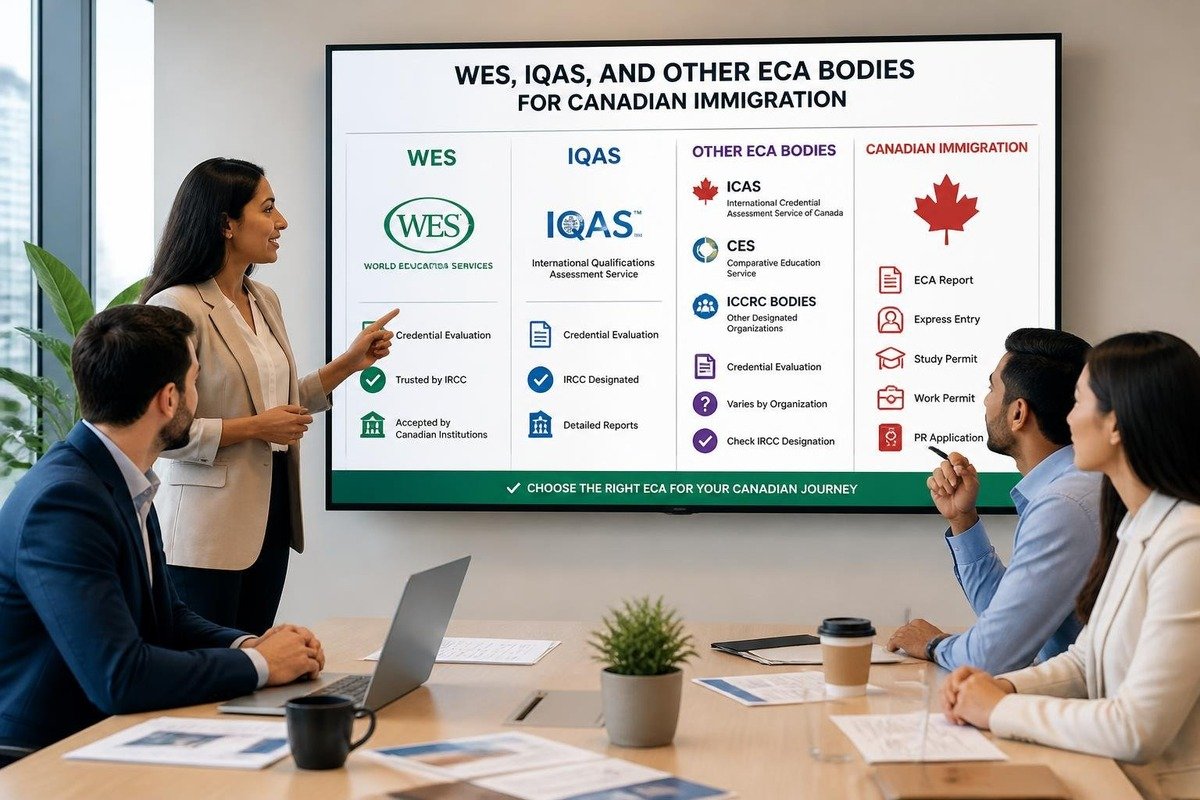
Points are awarded based on your highest level of completed education. Foreign credentials must be supported by an Educational Credential Assessment (ECA) from a designated organisation to count.
| Level of education | Points (single applicant) |
|---|---|
| Less than high school | 0 |
| High school diploma | 30 |
| 1-year post-secondary certificate/diploma | 90 |
| 2-year post-secondary program | 98 |
| Bachelor’s degree or 3+ year program | 120 |
| Two or more credentials (at least one 3+ years) | 128 |
| Master’s or professional degree | 135 |
| PhD | 150 (maximum) |
A bachelor’s degree earns 120 points. A Master’s earns 135. The gap between them is 15 points — meaningful but not transformative on its own. The bigger leverage from education comes through the skill transferability section.
Official language proficiency
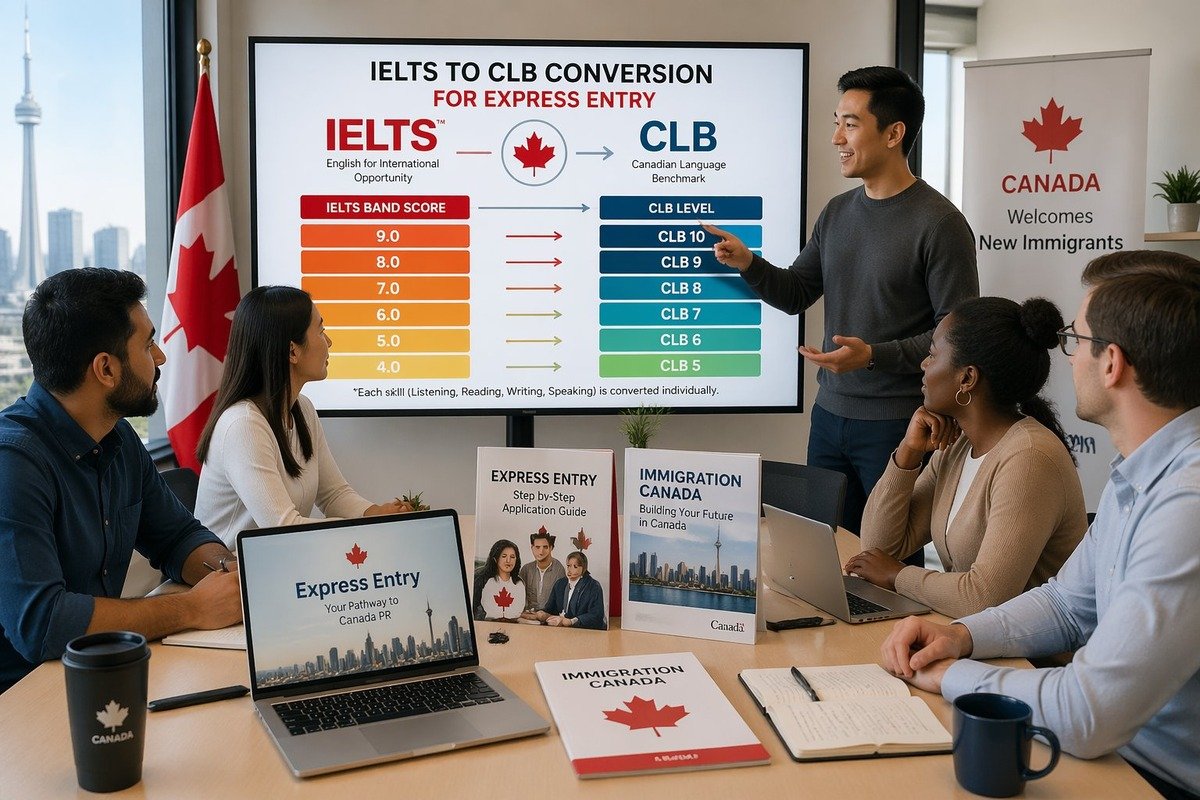
Language is the largest single factor in the CRS and the highest-return area for most candidates to improve. Points are awarded for your first official language (English or French) across four skills — Listening, Reading, Writing, and Speaking — with each skill scored independently.
For a single applicant, the maximum per skill is 34 points (136 points total). For applicants with a spouse, the maximum per skill is 32 points (128 points total).
| CLB level (per skill) | Points per skill (single) | Points per skill (with spouse) |
|---|---|---|
| Below CLB 4 | 0 | 0 |
| CLB 4 or 5 | 6 | 6 |
| CLB 6 | 9 | 8 |
| CLB 7 | 17 | 16 |
| CLB 8 | 23 | 22 |
| CLB 9 | 31 | 29 |
| CLB 10 or higher | 34 | 32 |
The jump from CLB 8 to CLB 9 is 8 points per skill for single applicants — 32 points across all four skills combined. This is the single most impactful improvement most candidates can make, especially combined with the skill transferability bonuses it unlocks.
A second official language earns up to 24 additional points (6 points per skill at CLB 9 or above). French proficiency at NCLC 7 or higher, combined with English at CLB 5 or higher, also earns 50 bonus points under the additional points section.
Canadian work experience
Points are awarded for skilled work performed in Canada in the last 10 years.
| Years of Canadian experience | Points (single applicant) |
|---|---|
| Less than 1 year | 0 |
| 1 year | 40 |
| 2 years | 53 |
| 3 years | 64 |
| 4 years | 72 |
| 5 or more years | 80 (maximum) |
Canadian experience is weighted more heavily than foreign work experience. One year of Canadian experience (40 points) outweighs any amount of foreign experience in this section alone — foreign experience earns nothing here, only through skill transferability.
Section B — Spouse or common-law partner factors
If your spouse or common-law partner is accompanying you to Canada, their qualifications add up to 40 additional points. This section covers their education (maximum 10 points), their first official language proficiency (maximum 20 points), and their Canadian work experience (maximum 10 points).
Including a spouse lowers the maximum core points available to the primary applicant (from 500 to 460). Whether including a spouse helps or hurts your total depends entirely on the strength of their profile.
Section C — Skill transferability factors
This section rewards combinations of your human capital factors. It has a maximum of 100 points and is where CLB 9 functions as the most powerful multiplier in the system.
Education + language:
- Post-secondary degree + CLB 7 or 8 in all first-language skills: up to 25 points
- Post-secondary degree + CLB 9+ in all first-language skills: up to 50 points
Education + Canadian experience:
- Post-secondary degree + Canadian work experience: up to 50 points
Foreign work experience + language:
- 1–2 years foreign experience + CLB 7 or 8: up to 25 points
- 3+ years foreign experience + CLB 9+: up to 50 points
Foreign work experience + Canadian experience:
- Foreign experience + Canadian experience: up to 50 points
Trades (certificate of qualification + language): up to 50 points
The 100-point maximum is shared across all combinations. The key insight: CLB 9 doubles the education and foreign work experience transferability bonuses. A candidate with a bachelor’s degree and 3+ years of foreign experience who improves from CLB 8 to CLB 9 picks up 32 core language points plus up to 50 additional transferability points — a combined improvement of up to 82 CRS points.
Section D — Additional points
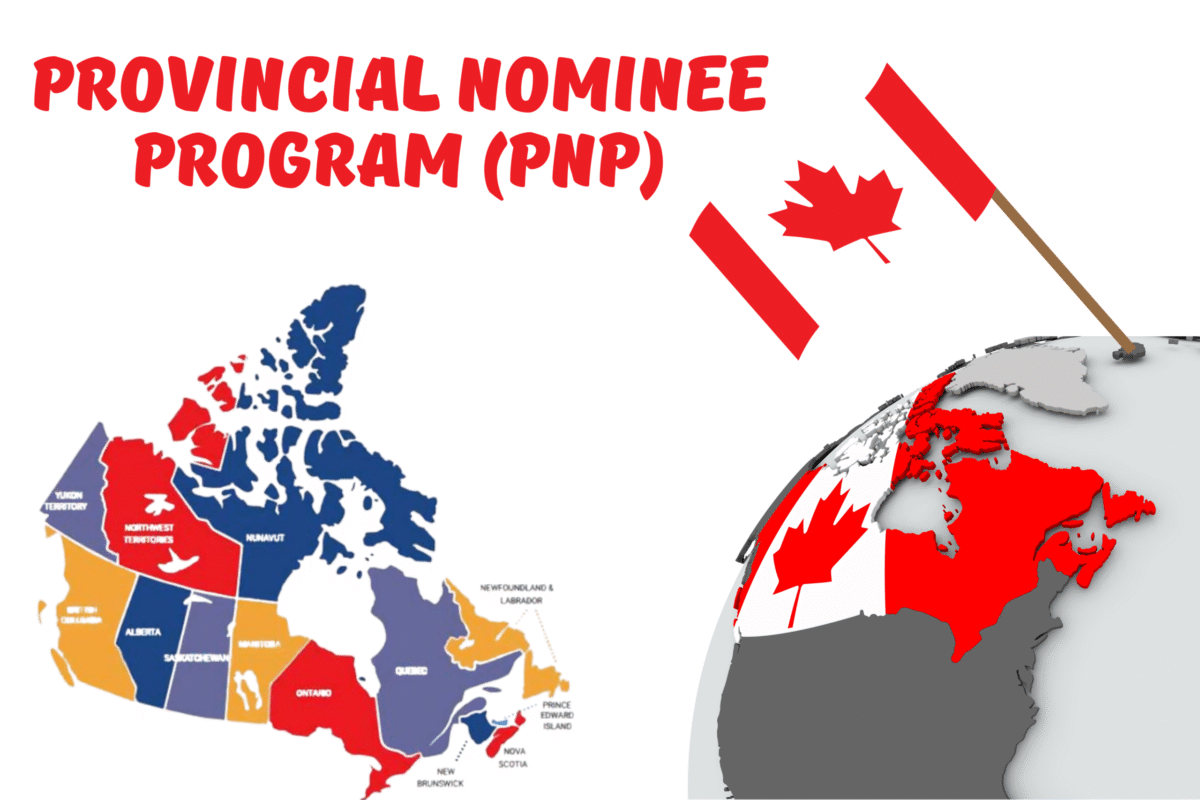
Provincial nomination: 600 points. A provincial or territorial nomination through an Express Entry-aligned stream adds 600 points — effectively guaranteeing an invitation. The total for this section is capped at 600, so other additional points cannot stack on top.
French-language proficiency bonus: 25 or 50 points. Achieving NCLC 7 or higher in all four French skills earns 25 additional points if English is CLB 4 or below, or 50 additional points if English is CLB 5 or higher. These are separate from core language points.
Canadian post-secondary education: 15 or 30 points. A 1–2 year Canadian credential earns 15 points; 3+ years earns 30 points. Physical presence for at least eight months of full-time study is required.
Sibling in Canada: 15 points. A brother or sister who is a Canadian citizen or permanent resident, aged 18+, and living in Canada adds 15 points — for you or your accompanying spouse.
The 2025 change that reshapes every strategy: job offer points removed
As of March 25, 2025, IRCC eliminated CRS points for valid job offers entirely. Previously, a job offer in a skilled occupation added 50 points; a senior managerial position added 200. Both are now zero for CRS ranking purposes. More than 37,000 candidates lost points when this change took effect.
Express Entry is now a purer human capital competition. Job offers remain relevant for program eligibility under certain FSWP and FSTP conditions, but they no longer affect your position in the pool.
How draws work: three types with very different cut-offs
IRCC holds draws roughly every two weeks. The type of draw determines which candidates are eligible and, by extension, what cut-off score is required.
General draws invite the highest-scoring candidates across all three programs. These have become rare — no general draw has occurred since April 2024. When they do occur, cut-offs are high.
Program-specific draws target one program. CEC draws were the most common type in 2025, with cut-offs ranging from 515 to 547.
Category-based draws are the defining feature of the current Express Entry era. Introduced in mid-2023, these draws target candidates in a specific category — French-language proficiency, healthcare and social services, education occupations, STEM, trades — regardless of their overall CRS rank. Because the eligible pool is smaller, cut-offs are substantially lower.
The 2025 draw landscape in numbers:
- French-language draws issued as many as 7,500 ITAs in a single round, with cut-offs as low as 379. French draws accounted for more than a third of all ITAs issued in 2026.
- CEC draws cut off between 515 and 547.
- Healthcare draws ran cut-offs in the mid-to-high 460s.
- The debut Education draw had a cut-off of 479.
- PNP draws show cut-offs of 699–855 — reflecting nomination points already added, not raw competition.
The 59% of all 2025 ITAs that went through category-based draws went to candidates with CRS scores well below what general or CEC draws required.
The tie-breaker rule
When multiple candidates share the same score at the cut-off, IRCC selects based on profile submission date and time — earlier profiles are chosen first. Entering the pool as soon as you are eligible is worth doing for this reason alone, even if you intend to improve your score over time.
What you can and cannot control
Fixed: Age, past education, historical work experience outside Canada.
Improvable short-term: Language scores — CLB 9 across all four skills is the highest-return single change for most applicants. Profile updates reflecting newly completed work periods.
Improvable medium-term: Canadian work experience, which earns significantly more points per year than foreign experience and unlocks transferability bonuses.
Improvable through external factors: Provincial nomination (600 points). French proficiency (50 bonus points plus access to lower-cut-off draws). Adding a second language test result.
No longer applicable: Job offer points, removed March 25, 2025.
Key takeaways
The CRS allocates up to 1,200 points across four sections: core human capital (500 max), spouse factors (40 max), skill transferability (100 max), and additional points (600 max).
Language is the highest-return improvable factor. CLB 9 across all four skills earns maximum core points and doubles the transferability bonuses from education and work experience.
Job offer points are gone as of March 2025. The system now rewards human capital almost exclusively.
Category-based draws have transformed who gets invited. French-language proficiency, healthcare experience, and other qualifying categories provide access to invitations at scores far below general draw cut-offs.
Provincial nomination adds 600 points and effectively guarantees selection — it is the most powerful single factor in the system for those who can obtain it.
Profile submission date is the tie-breaker for equal scores. Enter the pool early.
This post is for informational purposes only and does not constitute legal or immigration advice. CRS criteria, draw types, and cut-off scores are subject to change — always verify current requirements at canada.ca.