How to Sponsor a Dependent Child for Canadian Permanent Residency
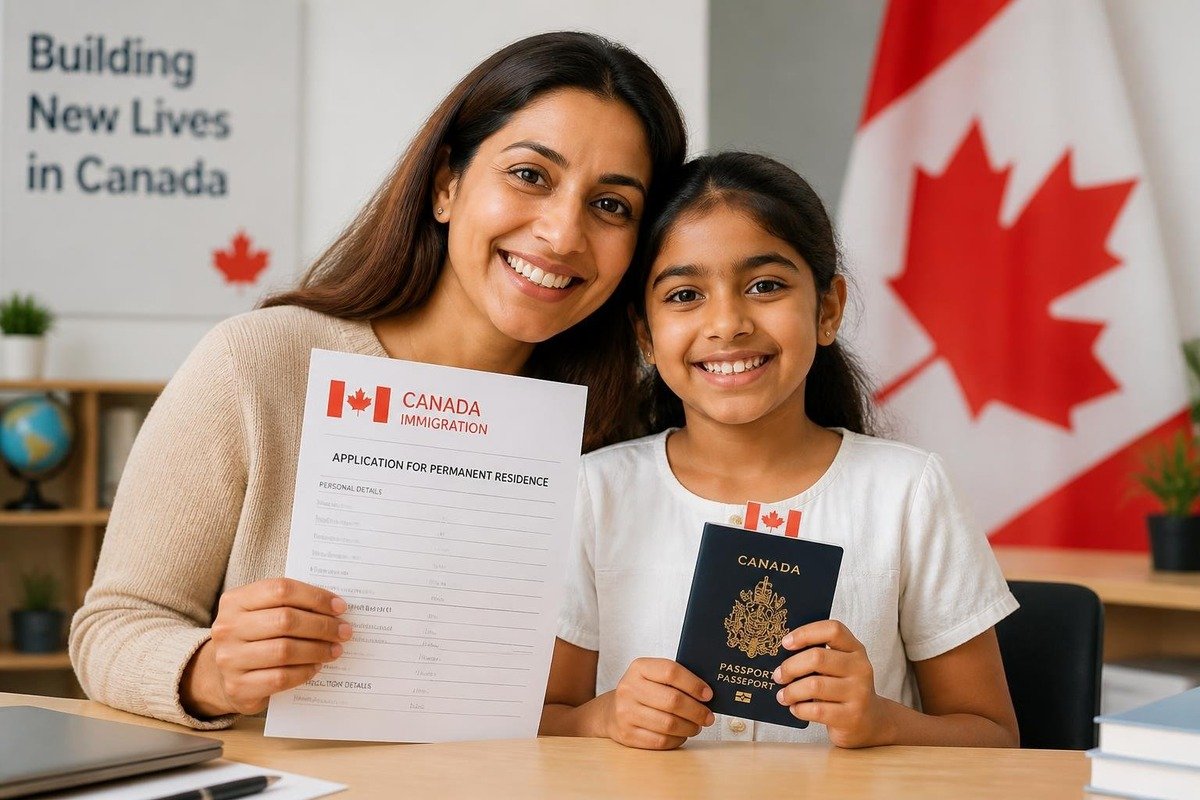
For Canadian citizens and permanent residents with children living abroad, the dependent child sponsorship program is the primary pathway to reuniting your family in Canada. Unlike the Express Entry system with its points and draws, child sponsorship sits within the Family Class — there is no competition, no CRS score, and no language test required for the child being sponsored.
What the process does require is precision. Age eligibility rules are strict and time-sensitive. The definition of “dependent” is more nuanced than most people expect. Documentation requirements are extensive. And several important rules — including what happens when your child approaches the age threshold and a specific Quebec intake freeze in 2025–2026 — can catch families off guard if they are not aware of them.
This guide walks through who qualifies as a dependent child, who can sponsor them, how the application works, what it costs, and the most important timing considerations to plan around.
Who qualifies as a dependent child
IRCC’s definition of a dependent child for immigration purposes rests on two criteria: age and marital status. Both must be met simultaneously.
Age: A child qualifies as a dependent if they are under 22 years old on the lock-in date. This age threshold applies to biological children, adopted children, and stepchildren alike. The current under-22 limit has been in place since October 24, 2017 — prior to that date, the limit was under 19.
Marital status: The child must not be married or in a common-law relationship at the time of the lock-in date. A child who marries or enters a common-law relationship during processing becomes ineligible, even if they were fully eligible when the application was submitted.
Both criteria must be met at the same time. A child who is 21 and unmarried qualifies. A child who is 20 and married does not.
The over-age exception
Children aged 22 or older can still qualify as dependants under a specific exception. To meet it, the child must satisfy all three of the following conditions:
- They have been continuously financially dependent on their parent since before they turned 22
- They are unable to financially support themselves due to a physical or mental condition
- That condition must be documented with medical evidence confirming both that it existed before age 22 and that it continues to prevent financial self-sufficiency
This exception is genuinely narrow. Being unemployed, being a student, or choosing to rely on parents does not qualify. The condition must be a genuine medical or psychological one that prevents the ability to earn income, and it must have pre-dated the age-22 threshold. Medical documentation from a licensed practitioner is required, and IRCC officers assess these cases carefully.
Biological, adopted, and stepchildren
All three types qualify under the program, provided the legal relationship is established and documented.
Biological children require a birth certificate naming the sponsor as the legal parent. In cases of disputed parentage or where a birth certificate does not exist, DNA testing may be required or voluntarily provided to establish the relationship.
Adopted children follow a separate, more complex process. The adoption must be legally finalised under both the laws of the country where the adoption occurred and Canadian law. IRCC will not process an adoption that was completed solely for immigration purposes — the adoption must have been conducted in the child’s best interests, meeting the criteria of the Hague Convention on Intercountry Adoption where applicable. A separate guide (Guide 5196) applies to adopted children, and the sponsorship application for an adopted child must include the full adoption decree and documentation demonstrating compliance with both jurisdictions’ adoption laws.
Stepchildren qualify if the legal parental relationship was established before the child turned 18. A marriage certificate establishing the relationship between the sponsor and the child’s biological parent, plus the child’s birth certificate, are the primary documents needed to establish the stepparent relationship.
The lock-in date: the most important concept in child sponsorship
The lock-in date is the date IRCC receives a complete application for permanent residence. On that date, your child’s age is “frozen” for the duration of the processing period.
This means that if your child is 21 years and 11 months old when IRCC receives your complete application, they remain eligible as a dependent child even if they turn 22 the following month — and even if processing takes another year or two. The age on the lock-in date is the only age that matters.
The critical qualifier is complete. An application that is returned as incomplete — due to missing documents, unpaid fees, or improperly signed forms — does not benefit from the lock-in provision. The lock-in date only applies once IRCC has accepted the application as complete. If your application is returned and resubmitted, the new submission date becomes the lock-in date.
What else locks in on the lock-in date
Marital status also locks in on the same date. A child who is unmarried on the lock-in date remains eligible even if they marry during processing — but this is a nuanced point. If a child’s marital status changes during processing, the sponsor should seek advice on whether and how to notify IRCC, since the implications vary by circumstances.
One important warning: if a child is approaching the age-22 threshold, timing the submission of a complete application before that birthday is the single most urgent task in the entire process. Submitting an incomplete application that gets returned — even days before the birthday — can result in the child losing eligibility entirely.
Who can sponsor
To sponsor a dependent child for Canadian permanent residence, you must meet the following conditions:
Status: You must be a Canadian citizen, a permanent resident currently living in Canada, or a person registered under the Indian Act. Permanent residents who live outside Canada cannot sponsor a dependent child — only Canadian citizens living abroad may do so, provided they demonstrate their intent to return to Canada when the child becomes a permanent resident.
Age: You must be at least 18 years old.
Not in default: You cannot have previously sponsored someone and failed to meet the financial commitments of that undertaking — unless you are now sponsoring a spouse, partner, or dependent child (which are exempt from the default bar in most cases).
Not in undischarged bankruptcy.
Not subject to a removal order.
Not receiving social assistance for reasons other than a disability.
No disqualifying criminal history: A conviction for a violent offence, an offence causing bodily harm to a relative, or a sexual offence may disqualify you from sponsoring.
Income requirements — when they apply and when they don’t
For most dependent child sponsorship cases, there is no minimum income requirement. This is a meaningful distinction from other sponsorship categories, such as parent and grandparent sponsorship, which have strict income thresholds.
The income requirement only applies in two specific situations:
- You are sponsoring a dependent child who has one or more dependent children of their own
- You are sponsoring a spouse or partner who has a dependent child, and that child also has dependent children
In these cases, you must demonstrate that your income meets the Minimum Necessary Income (MNI) requirement — calculated based on your total family size, using the Low-Income Cut-Off tables. The Financial Evaluation Form (IMM 1283) is required when the MNI threshold applies.
If your sponsored child has no children of their own, you do not need to show proof of income. You do, however, sign a financial undertaking committing to support their basic needs.
The financial undertaking
By signing the sponsorship undertaking, you legally commit to providing for your child’s basic needs — food, clothing, shelter, and health needs not covered by public health services — for the duration of the undertaking period.
For children under 22: The undertaking lasts 10 years from the date they become a permanent resident, or until they turn 25, whichever comes first.
For children 22 and over (over-age exception): The undertaking lasts 3 years from the date they become a permanent resident.
If your sponsored child receives provincial social assistance during the undertaking period, you may be required to repay it to the government. Until you repay it, you cannot sponsor any other person.
The application process step by step
Child sponsorship is a two-part application: the sponsor submits a sponsorship application, and the child submits a permanent residence application. Both are submitted simultaneously online through the IRCC portal.
Step 1 — Obtain the application package. Download the package from the IRCC website. It includes the instruction guide, all required forms, and a personalised document checklist. Read the checklist carefully — it is tailored to your specific situation and lists exactly which documents are required.
Step 2 — Gather documents. Collect all required documents before starting the forms. Missing documents are the most common reason applications are returned as incomplete.
Step 3 — Complete and sign all forms. Both the sponsor and the child (or their legal guardian if the child is a minor) must complete and digitally sign the required forms. Forms that are incomplete or unsigned in the wrong places are returned.
Step 4 — Pay fees. Fees must be paid in full at the time of submission. Underpayment results in return of the application.
Step 5 — Submit the application online.
Step 6 — Respond to IRCC requests. After submission, IRCC may request additional documents, biometrics appointments, or medical exam instructions. Respond promptly — delays in responding extend processing time.
Documents required
Sponsor’s documents
- Proof of Canadian citizenship (passport or citizenship certificate) or permanent residency (PR card or COPR)
- Government-issued photo ID
- Proof of status in Canada (for permanent residents — confirmation of living in Canada)
- Completed sponsorship forms: IMM 1344
Child’s documents
- Birth certificate (certified copy, translated if not in English or French)
- Adoption papers, if applicable (full decree and supporting documentation)
- Valid passport — all pages, not just the biographical page
- Two passport-size photographs meeting IRCC specifications
- Police clearance certificates from every country where the child has lived for six consecutive months or more since turning 18. For children under 18, police certificates are generally not required
- Immigration medical exam results from an IRCC-approved panel physician
- Biometrics (required for children aged 14 and over)
- If one parent is not accompanying the child and the sponsor does not have sole custody: a notarised letter of consent from the non-accompanying parent
Relationship proof
The parent-child relationship must be documented clearly. Primary documents include the birth certificate naming the sponsor as a legal parent. For situations where the birth certificate does not establish the relationship unambiguously — for example, where the sponsor is not listed as a parent — IRCC may request additional evidence or DNA testing.
For adopted children, the full adoption order must be included. For stepchildren, both the marriage certificate establishing the relationship with the biological parent and the child’s birth certificate are required.
Translation requirements
All documents not in English or French must be accompanied by: a copy of the original document, a complete certified English or French translation, and the translator’s signed affidavit. Translations by family members are not accepted.
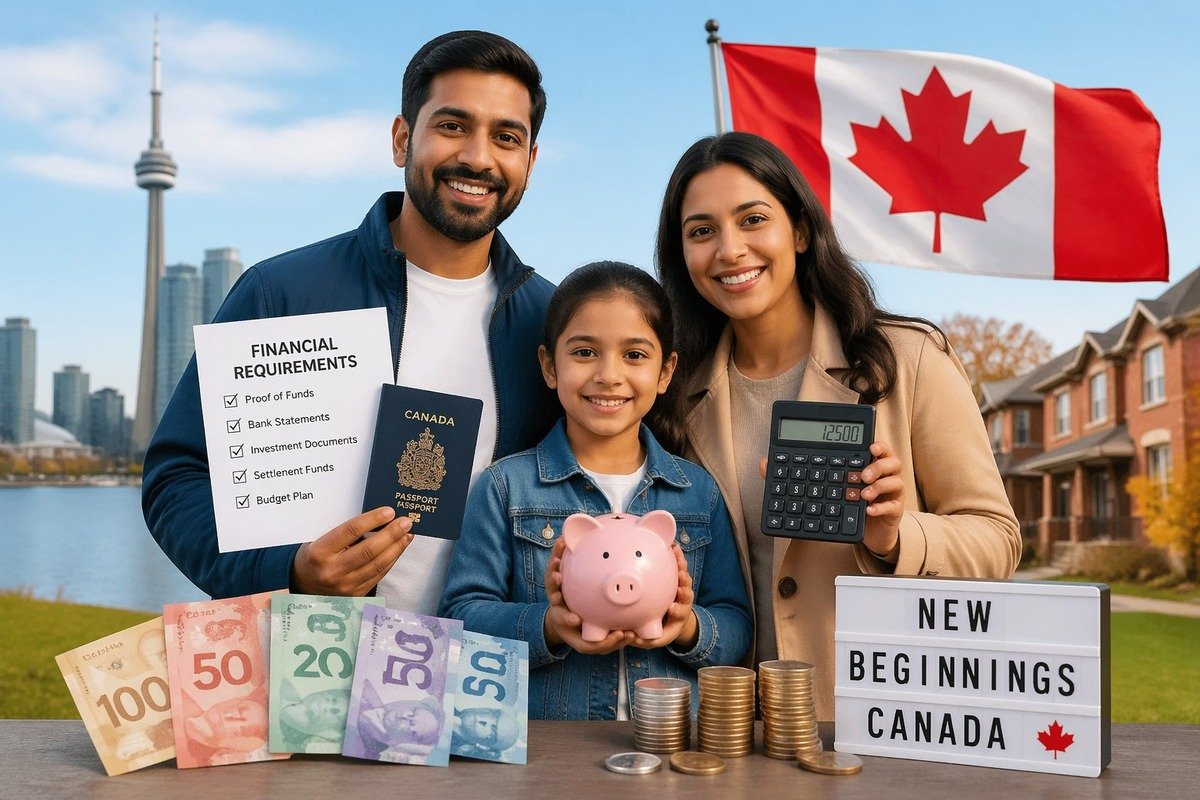
Fees (2025)
| Fee | Amount (CAD) |
|---|---|
| Sponsorship processing fee | $75 |
| Dependent child processing fee | $175 |
| Right of Permanent Residence Fee (RPRF) | $575 |
| Biometrics (children 14 and over) | $85 |
| Total (child 14+, no own dependants) | $910 |
If the sponsored child has dependent children of their own being included in the application, an additional $175 processing fee per child applies.
The RPRF ($575) is refundable if the application is refused or withdrawn before a final decision is made. All other fees are non-refundable once IRCC begins processing.
Additional third-party costs to budget for include the immigration medical exam (approximately $175–$400 depending on location), police certificates, and certified translations.
Quebec residents: As of 2025–2026, Quebec’s MIFI has reached its maximum number of undertaking applications for dependent children aged 18 and over until June 25, 2026. Sponsors living in Quebec who wish to sponsor a child aged 18 or older cannot currently proceed with a new undertaking application until the intake cap reopens. Federal fees should not be paid until the Quebec undertaking step is available.
Processing times
Processing times for dependent child sponsorship vary significantly depending on the child’s country of residence. IRCC does not publish a single standard processing time for this category — times range from several months to over a year depending on volume, the country of origin, and the complexity of the case.
Key factors that affect processing time: completeness of the application (incomplete applications are returned and must be resubmitted, resetting the clock), whether biometrics have been collected, the child’s country of residence (some countries have higher volumes or additional security checks), and whether any additional documentation is requested.
Tracking the application through the IRCC online portal is the best way to monitor progress. Respond to any IRCC requests for additional documents within the deadline provided.
What happens when your child arrives in Canada
Once the application is approved, the child receives a Confirmation of Permanent Residence (COPR) and, if they are outside Canada, a permanent resident visa allowing them to enter. Upon arrival and landing, they become a Canadian permanent resident and are eligible for:
- A permanent resident card (typically mailed within a few weeks of landing)
- Enrolment in provincially funded public school
- Provincial health insurance coverage (subject to provincial waiting periods — typically two to three months)
- The right to work or study in Canada
- The right to apply for Canadian citizenship after meeting the residency requirement (three of the last five years as a PR)
Common reasons for refusal or delay
Incomplete application. Missing documents, unsigned forms, or unpaid fees cause applications to be returned before they are assessed. This is the most common source of delay and — for children approaching the age-22 limit — can result in losing eligibility entirely.
Relationship not established. If the parent-child relationship cannot be clearly established from the documents provided, IRCC may request DNA testing or additional evidence. Inconsistencies between the birth certificate and other documents are a common trigger.
Child becomes ineligible during processing. If a child marries or enters a common-law relationship after the lock-in date, they may lose eligibility. Sponsors should be aware of this and understand how to notify IRCC if the child’s circumstances change.
Adoption does not meet IRCC’s legal requirements. Adoptions completed solely for immigration purposes, or adoptions that do not comply with both the originating country’s laws and Canadian law, will not be recognised.
Medical or criminal inadmissibility. The child must pass medical and security checks. A health condition that would place excessive demand on Canadian health services, or a criminal record, can result in inadmissibility.
Key takeaways
A dependent child for IRCC purposes is under 22 years old and not married or in a common-law relationship on the lock-in date. Children 22 and over may qualify under the over-age exception only if they have been financially dependent on the parent since before 22 due to a documented medical or physical condition.
The lock-in date is the date IRCC receives a complete application. The child’s age is frozen on that date — but only if the application is accepted as complete. An incomplete application that is returned does not benefit from age lock-in.
If your child is approaching 22, submitting a complete application before their birthday is the single most urgent priority. A single missing document can cause the application to be returned, resetting the lock-in date and potentially causing the child to age out.
There is no minimum income requirement for most child sponsorship cases. The income threshold only applies when the sponsored child has dependent children of their own.
The financial undertaking lasts 10 years (or until the child turns 25, whichever is first) for children under 22. It is a legally binding commitment — if the child receives social assistance during that period, the sponsor may be required to repay it.
Quebec residents sponsoring a child aged 18 or over face a provincial intake cap through June 25, 2026. Do not pay federal fees without first confirming the Quebec undertaking step is available.
This post is for informational purposes only and does not constitute legal or immigration advice. IRCC requirements, fees, and processing times are subject to change — always verify current requirements at canada.ca. For adopted children, complex custody arrangements, or cases where the child is approaching the age threshold, consult a Regulated Canadian Immigration Consultant (RCIC) or immigration lawyer.