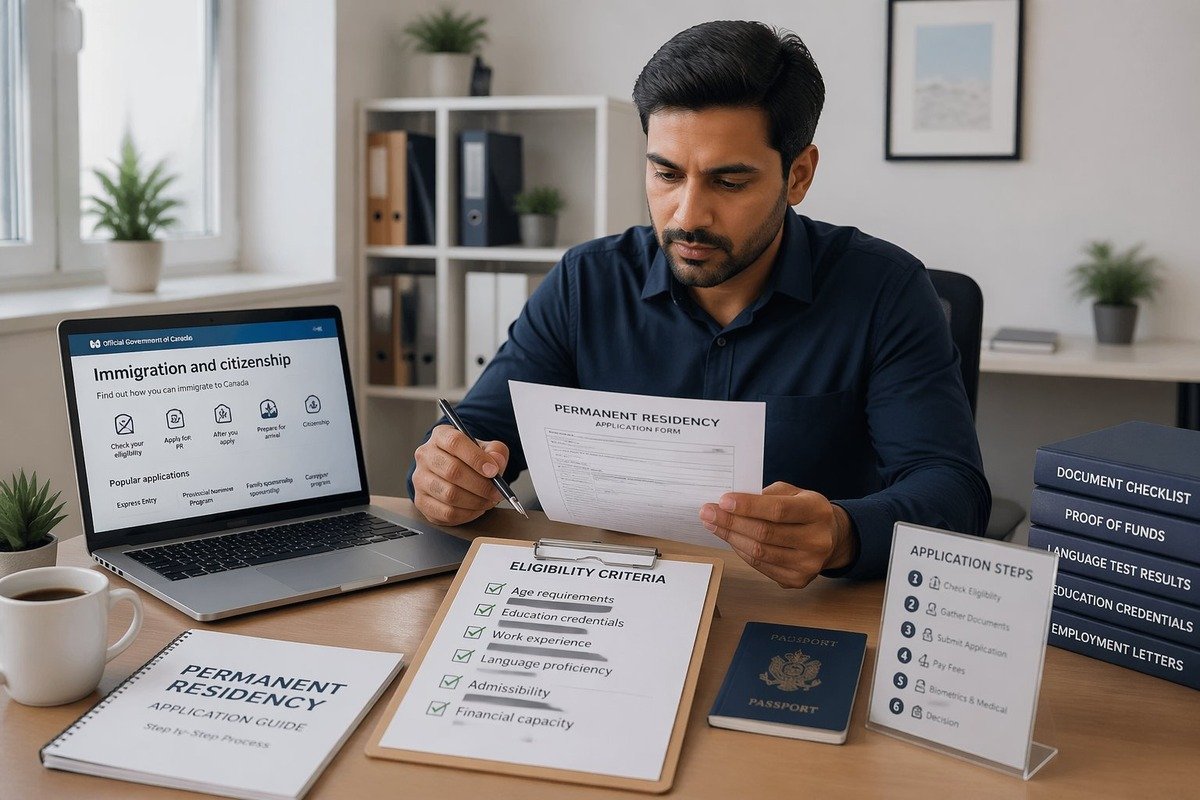
Spousal Sponsorship in Canada: Eligibility, Documents, and Processing Time
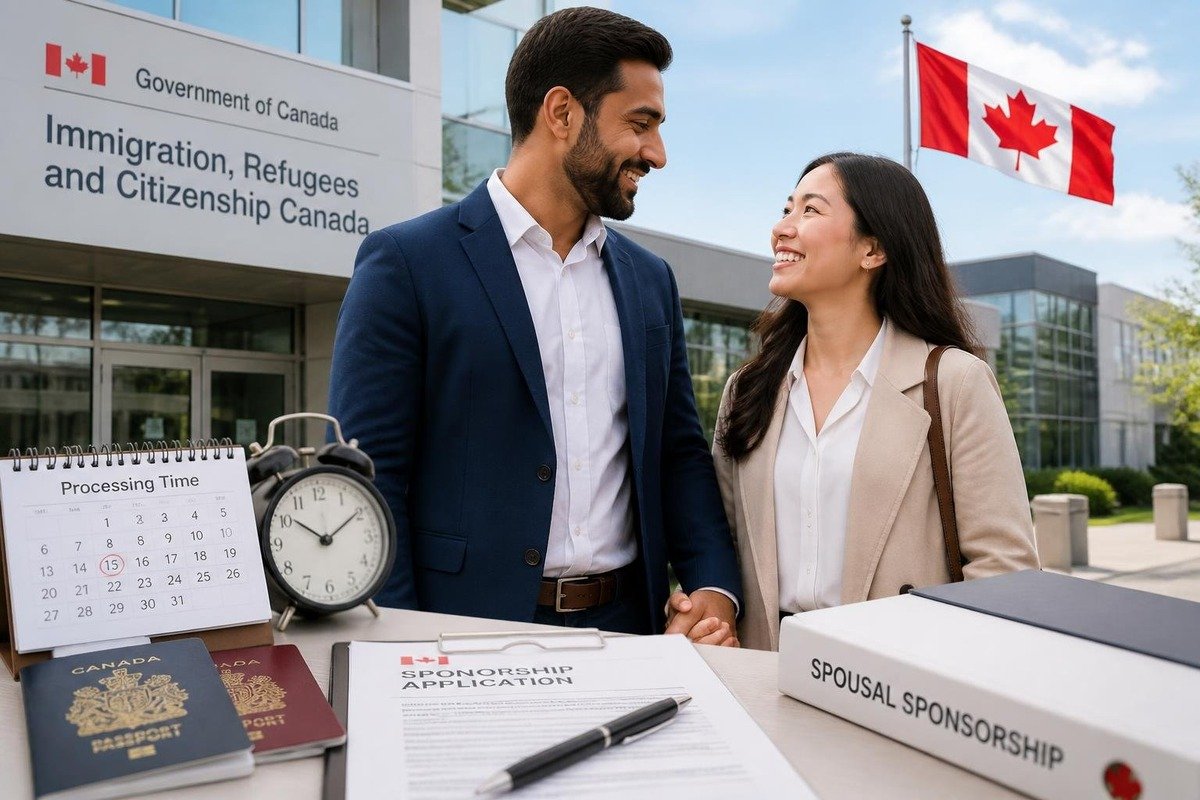
Spousal sponsorship is Canada’s most direct family reunification pathway. It allows Canadian citizens and permanent residents to bring their spouse, common-law partner, or conjugal partner to Canada as a permanent resident — with no points system, no language minimums for the sponsor, and no minimum income requirement in most cases.
It is also one of the most document-intensive applications in the Canadian immigration system. Relationship genuineness is scrutinised carefully. Processing times vary significantly between inland and outland routes. And in 2025, new restrictions and a Quebec intake cap added complexity for some applicants.
This guide covers who can sponsor, who can be sponsored, which route to choose, what documents you need, what it costs, and how long to expect.
Who can be a sponsor
To sponsor a spouse or partner for Canadian permanent residence, you must meet all of the following conditions:
Status: You must be a Canadian citizen, a permanent resident, or a person registered in Canada as an Indian under the Indian Act. Canadian citizens living outside Canada can sponsor their spouse, provided they commit to returning to Canada once the sponsorship is approved. Permanent residents must be living in Canada to sponsor — a permanent resident who lives abroad cannot sponsor a spouse.
Age: You must be at least 18 years old.
Financial undertaking: You must sign a legally binding undertaking — a promise to provide for your sponsored partner’s basic needs, including food, clothing, shelter, and health needs not covered by public services. In most spousal sponsorship cases, there is no minimum income requirement. The undertaking lasts three years from the date your partner becomes a permanent resident (in all provinces except Quebec, which has a different undertaking length).
Not in default: You cannot sponsor if you previously sponsored someone and failed to meet the financial commitments of that undertaking — unless you are now sponsoring a spouse, partner, or dependent child.
Not bankrupt: You cannot currently be in undischarged bankruptcy. This restriction does not apply in Quebec if you are sponsoring a spouse, partner, or dependent child.
Not receiving social assistance: You must not be receiving social assistance for a reason other than a disability.
No disqualifying criminal history: A conviction for a violent criminal offence, an offence against a relative causing bodily harm, or a sexual offence — whether in Canada or abroad — disqualifies you from sponsoring.
No removal order: You must not be subject to a removal order requiring you to leave Canada.
Who can be sponsored
You can sponsor someone who falls into one of three relationship categories:
Legally married spouse. The marriage must be legally valid where it took place and recognised under Canadian law. You need an official marriage certificate issued by the government authority where the marriage occurred — a record of solemnisation or a marriage licence alone is not accepted. The relationship must be genuine and not entered into primarily for immigration purposes.
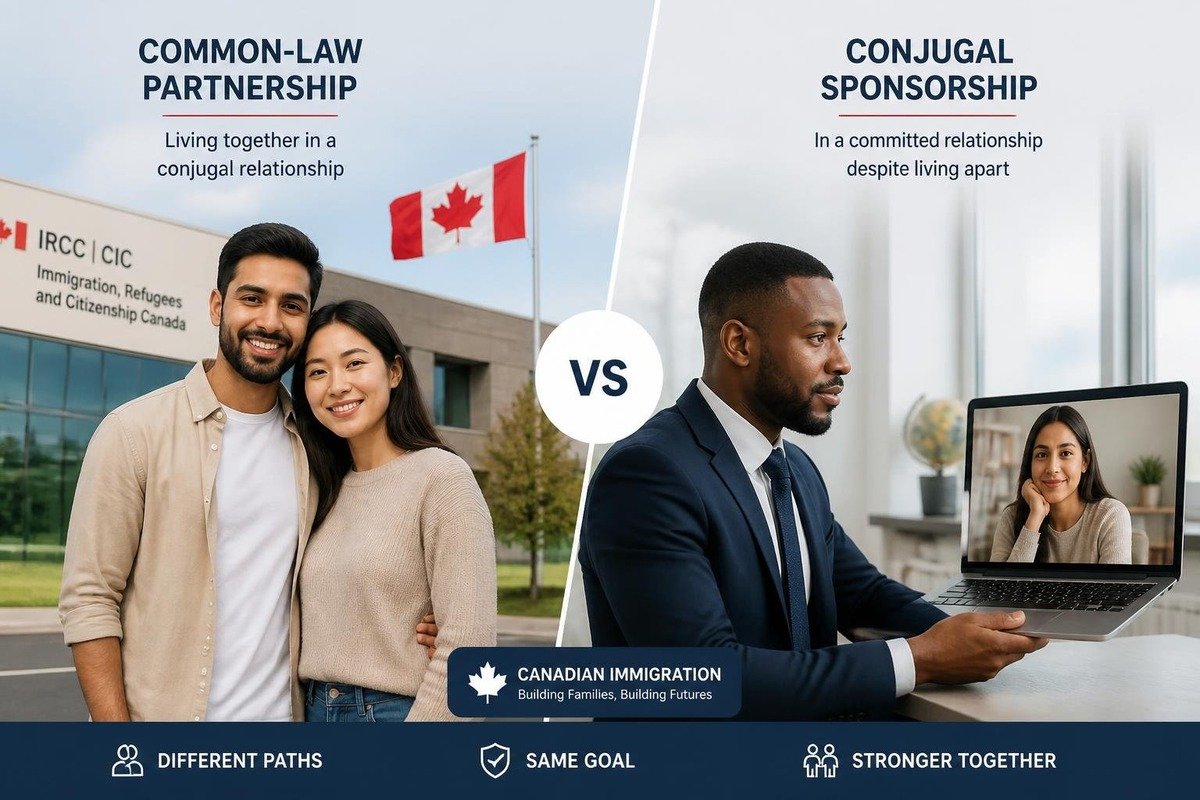
Common-law partner. A common-law partner is someone who has lived with you in a conjugal relationship for at least 12 consecutive months without interruption. You need documented evidence of continuous cohabitation — joint leases, shared utility bills, combined financial accounts, or similar records covering the full 12-month period.
Conjugal partner. A conjugal partner is someone who has been in a committed relationship with you for at least one year but is unable to live with you or marry you due to significant legal or immigration barriers — for example, their home country does not grant divorce, or immigration restrictions prevented cohabitation. Conjugal partnerships require the most evidence and must demonstrate that the barriers to cohabitation are genuine and beyond your control. Conjugal partners must apply through the outland route.
Dependent children of the sponsored person can also be included in the application, provided they meet IRCC’s definition of dependant (generally under 22, or older with a permanent physical or mental condition).
Inland vs outland: the most important decision you will make
Spousal sponsorship applications can be filed through two distinct routes, and the choice between them affects processing time, the right of appeal, your partner’s ability to remain in Canada during processing, and what happens if something goes wrong.
Inland sponsorship (Spouse or Common-Law Partner in Canada Class)
Inland sponsorship is for couples where the sponsored person is currently in Canada and living with the sponsor. The sponsored person must be physically in Canada when the application is submitted and must maintain their status throughout processing.
The primary advantage is access to a Spousal Open Work Permit. Once IRCC issues an Acknowledgment of Receipt confirming the application is complete, the sponsored person can apply for an open work permit — typically issued within three to four months — allowing them to work for any eligible employer in Canada while waiting for permanent residence. This is financially significant for couples who cannot afford a period without income.
The significant disadvantage is that if the inland application is refused, there is no right of appeal to the Immigration Appeal Division. The only recourse is an expensive and time-consuming judicial review. This makes inland applications less forgiving of errors or genuineness concerns.
A critical practical constraint: if the sponsored person leaves Canada after the inland application is submitted and is denied re-entry, the application is cancelled — not paused or transferred to an outland file. IRCC must remain the primary place of residence for both parties throughout processing.
Current official processing time for inland sponsorship: approximately 24 months as of 2025.
Outland sponsorship (Family Class)
Outland sponsorship is for couples where the sponsored person lives outside Canada, or where the sponsor chooses to apply through the Family Class even though the partner is in Canada. Outland applications do not require the sponsored person to be in Canada during processing.
The primary advantage is the right of appeal. If an outland application is refused, the sponsor can appeal to the Immigration Appeal Division. This is a meaningful protection for cases where the officer’s assessment of genuineness is disputed.
Outland applications can also be filed from within Canada — this is a commonly misunderstood point. A couple where the partner is already in Canada on a visitor visa can file an outland application, and the partner can apply for a Spousal Open Work Permit using the same process as inland applicants, provided they have a valid Acknowledgment of Receipt and maintain valid temporary status in Canada.
Current official processing time for outland sponsorship: approximately 15 months as of 2025.
The gap between the two timelines — 15 months outland versus 24 months inland — means many couples choose outland even when inland would technically be available. The right of appeal and faster processing timeline are the primary reasons.
Documents required
Spousal sponsorship is a dual-package application: the sponsor submits a sponsorship application, and the sponsored person submits a permanent residence application. Both are submitted together.
Sponsor’s documents
- Proof of Canadian citizenship or permanent residency (passport, citizenship certificate, or PR card)
- Completed sponsorship forms: IMM 1344 (Application to Sponsor) and IMM 5532 (Relationship Information and Sponsorship Evaluation)
- Proof of identity (passport biographical page)
- Birth certificate
- If previously married: divorce certificate or death certificate of prior spouse
- Financial documents (tax assessments, employment letters, or bank statements) — to demonstrate general financial capacity, even though no minimum income threshold applies for spousal cases
Sponsored person’s documents
- Valid passport (all pages, not just biographical page)
- Birth certificate
- National identity card
- Two passport-size photos meeting IRCC specifications
- Police clearance certificates from every country where you have lived for six months or more since age 18 — see IRCC’s country-specific requirements for the correct certificate type for each country
- Immigration medical exam results from an IRCC-approved panel physician (valid for 12 months from the date of the exam)
- Biometrics — must be provided with the PR application regardless of previous biometric submissions
Relationship evidence — the most important part of your package
IRCC assesses whether your relationship is genuine and whether it was entered into primarily for immigration purposes. Officers look for evidence of an authentic, ongoing relationship — not a checklist of documents. The strongest applications show the relationship’s full history: how you met, how it developed, how you communicate, and how you have shared your lives.
Acceptable relationship evidence includes:
For married couples: Official marriage certificate issued by the government authority where the marriage occurred. Wedding photos across the ceremony and reception. Correspondence — messages, emails, call logs. Evidence of shared finances: joint bank accounts, joint credit cards, shared bills. Shared residence documents: joint lease, joint mortgage, joint utility bills with both names. Travel records showing visits. Affidavits from family and friends attesting to the relationship.
For common-law partners: Proof of 12 consecutive months of cohabitation is the foundation. Joint lease or mortgage showing both names and covering the full period. Utility bills, insurance policies, or bank statements showing the shared address over time. Evidence of a shared life: joint accounts, shared financial obligations, shared travel. Statutory declarations confirming cohabitation from both partners.
For conjugal partners: Evidence of the relationship’s duration and depth — correspondence records, photos, documentation of visits. Clear explanation of the specific legal or immigration barriers that prevent cohabitation or marriage. Supporting documentation of those barriers, such as immigration restrictions or legal status in the home country.
A key IRCC rule: marriage certificates must show the marriage was legally registered with the government. A record of solemnisation or a marriage licence alone is not sufficient. Country-specific requirements apply — check IRCC’s country-specific instructions before gathering marriage documentation.
Translation requirements
All documents not in English or French must be accompanied by: the original document, a complete certified translation into English or French, and the translator’s signed affidavit attesting to their proficiency and the accuracy of the translation. Translation by family members is not acceptable.
Fees (as of 2025)
The government fees for a spousal sponsorship application (spouse with no dependent children) break down as follows:
| Fee | Amount (CAD) |
|---|---|
| Sponsorship application fee | $85 |
| Principal applicant processing fee | $545 |
| Right of Permanent Residence Fee (RPRF) | $575 |
| Biometrics | $85 |
| Total government fees | $1,290 |
The Right of Permanent Residence Fee ($575) is the only refundable fee — it is returned if the application is refused or withdrawn. The sponsorship fee, processing fee, and biometrics fee are non-refundable once IRCC begins processing.
Note: a fee increase for permanent residence applications took effect on April 30, 2026. Verify the current fee schedule at canada.ca before submitting.
Additional third-party costs to budget for:
- Immigration medical exam: approximately $175–$500 CAD depending on country of residence and clinic
- Police certificates: vary by country, typically $25–$150 per certificate
- Certified translations: approximately $30–$80 per page
Quebec residents: An additional provincial undertaking fee applies. As of early 2026, Quebec has also reached its intake cap for undertaking applications for spouses, common-law partners, and dependent children aged 18 or older — no new undertaking applications are being accepted until June 25, 2026. Quebec residents affected by this cap cannot proceed with the federal application until the provincial step is available. Do not pay federal IRCC fees without a clear plan for the Quebec undertaking step.
Processing times
Official IRCC processing times as of 2025–2026:
| Route | Processing time |
|---|---|
| Outland (Family Class) | Approximately 15 months |
| Inland (Spouse or Common-Law Partner in Canada Class) | Approximately 24 months |
These figures represent the time by which 80% of complete applications are processed. They are not guarantees or maximums. Processing times shift with application volumes, staffing, and IRCC priorities.
For inland applicants, the practical timeline to a Spousal Open Work Permit runs approximately three to four months from the Acknowledgment of Receipt, which typically arrives four to eight weeks after submission. This means income can typically resume within five to six months of submitting the application.
Outland applicants whose partners are outside Canada can apply for an expedited visitor visa to enter Canada during processing. Partners with an AOR may be eligible for faster processing of visitor visa applications, though approval is not guaranteed — the applicant must still demonstrate visitor visa eligibility including ties to the home country.
Genuineness interviews — what to expect
IRCC has increased the frequency of genuineness interviews, particularly for applications from regions historically associated with higher rates of immigration fraud. These interviews are typically conducted virtually.
If an interview is requested, both partners may be asked questions separately about their relationship, daily life, routines, family details, how they met, and plans for the future. The questions probe for consistency — inconsistent answers between partners are treated as a concern even when the inconsistency is innocent.
Preparation helps. Review your relationship timeline, significant dates, details of how you met, key family members on both sides, and your communication habits. Bring all relationship evidence documents to the interview.
Sponsor’s undertaking obligations — what you’re committing to
Signing the sponsorship undertaking is a legally binding commitment. If your sponsored partner receives any social assistance from a provincial government during the undertaking period, you may be required to repay it.
The undertaking period for spousal sponsorship is three years from the date the sponsored person becomes a permanent resident, in all provinces except Quebec (which has its own undertaking length under provincial rules).
The undertaking does not end if the relationship ends. Separation or divorce after PR is granted does not relieve you of the undertaking obligation. The three-year clock runs from landing date regardless of relationship status.
Common reasons for refusal
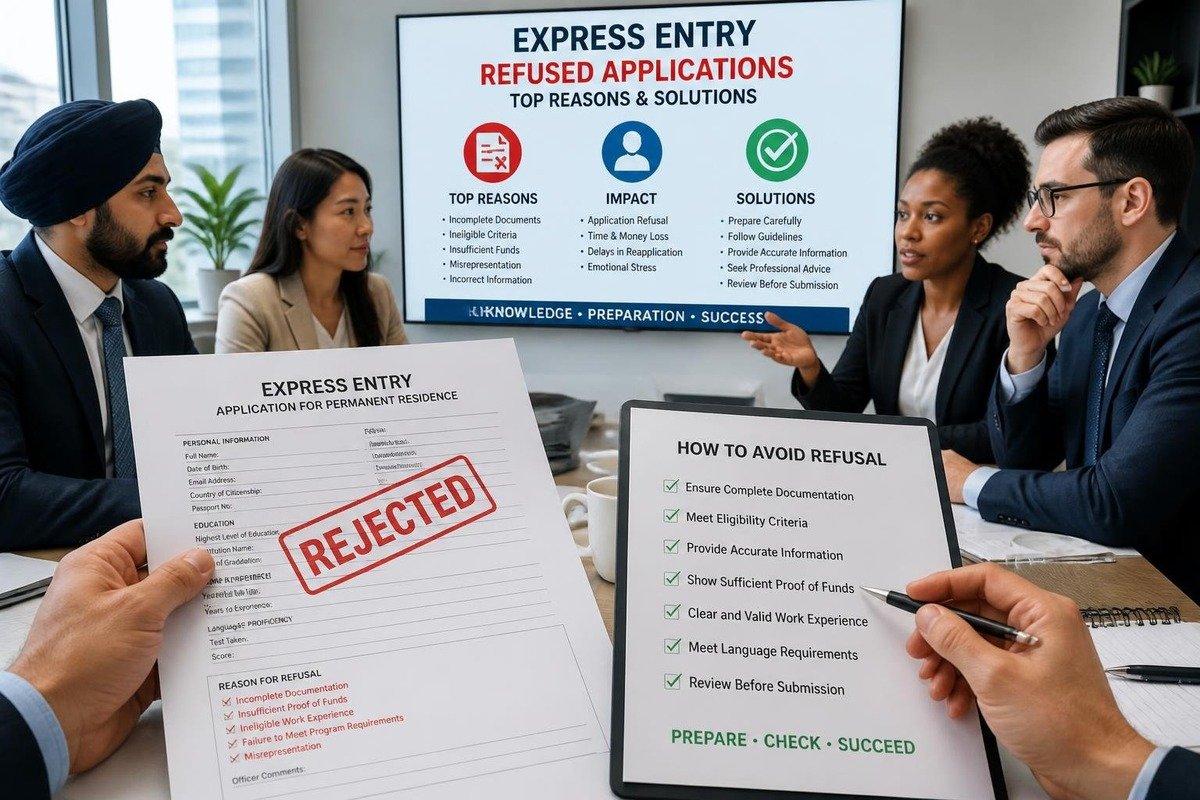
Genuineness concerns are the most frequent basis for refusal. IRCC may question the relationship if evidence is thin, inconsistent, or does not reflect a shared life. Generic or formulaic relationship statements are treated as a concern rather than as evidence.
Incomplete applications are a significant source of avoidable delays and returns. In 2025, more than one in four inland applications were returned as incomplete before an officer reviewed the relationship evidence — triggering months of delay and the loss of non-refundable fees. Every required document must be present, correctly formatted, and within its validity window before submission.
Misrepresentation — including inconsistencies between the sponsor’s profile and supporting documents — can result in a five-year bar on sponsoring or being sponsored.
Key takeaways
Spousal sponsorship allows Canadian citizens and permanent residents to sponsor a legally married spouse, common-law partner (12 months cohabitation), or conjugal partner for permanent residence. Both parties must be 18 or older.
There is no minimum income requirement for spousal sponsorship in most cases, but the sponsor must sign a legally binding three-year financial undertaking.
The choice between inland and outland has major practical consequences: outland is faster (approximately 15 months), preserves the right of appeal, and does not require the partner to remain in Canada. Inland allows earlier access to a Spousal Open Work Permit but has no right of appeal and requires continuous residence in Canada.
Government fees total $1,290 for a spouse with no dependent children, plus third-party costs for medical exams, police certificates, and translations. The RPRF ($575) is the only refundable fee.
Relationship evidence is the core of the application. Genuine, detailed, chronological documentation of the relationship — not a minimum checklist — is what distinguishes successful applications from those that face scrutiny.
Quebec residents face a provincial intake cap through June 25, 2026. Do not submit federal fees without a plan for the provincial undertaking step.
This post is for informational purposes only and does not constitute legal or immigration advice. Fees, processing times, and eligibility rules are subject to change — always verify current requirements at canada.ca. For complex situations including prior sponsorship history, criminal records, or previous refusals, consult a Regulated Canadian Immigration Consultant (RCIC) or immigration lawyer.