Canadian Immigration Tips for International Students

Studying in Canada is one of the most reliable doorways to long-term immigration success — but the rules have shifted significantly over the past two years, and 2026 brings another round of changes that every prospective and current international student needs to understand. Between a tighter study permit cap, an updated financial requirement, new co-op work rules, and stricter Post-Graduation Work Permit (PGWP) language standards, navigating your journey from study permit to permanent residency takes more than good grades — it takes a clear strategy.
This guide breaks down exactly what’s changed, what to expect, and how to position yourself for success at every stage.
Understand the 2026 Study Permit Landscape
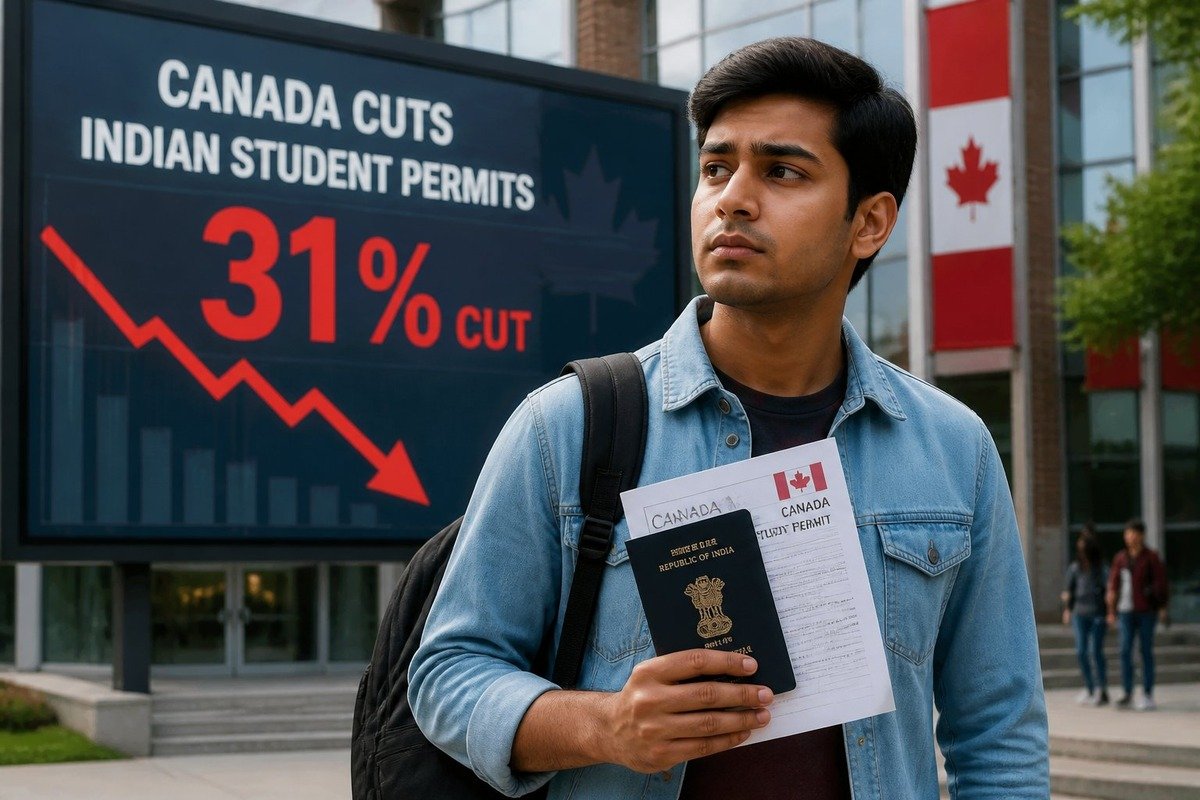
Canada is issuing fewer study permits than in previous years as part of a broader plan to bring the temporary resident population below 5% of the national total by the end of 2027. For 2026, IRCC plans to issue up to 408,000 study permits — roughly 155,000 to new applicants and 253,000 in extensions — a 7% drop from 2025.
What this means for you:
- Apply early. With a fixed national cap and provincial/territorial allocations, late applications face a higher risk of processing delays or running into capped limits.
- Confirm your Provincial Attestation Letter (PAL) status. Most study permit applicants still need a PAL or Territorial Attestation Letter (TAL) from the province where they’ll study — though as of January 1, 2026, master’s and doctoral students at public designated learning institutions (DLIs) are exempt from this requirement.
- Choose a DLI carefully. Only designated learning institutions can host international students under a study permit — verify your school’s DLI number before applying.
Updated Financial Requirement
You must now show proof of funds covering $22,895 in living expenses for a single applicant (in addition to tuition and travel costs) — a figure IRCC adjusts annually against the cost of living. Acceptable proof includes:
- GIC (Guaranteed Investment Certificate) from a participating Canadian bank
- Recent bank statements (typically the last 4 months)
- Proof of a Canadian student loan or scholarship
- A letter from your sponsor with proof of funds, if applicable
Know Your Work Rights as an International Student
Work rules for international students are now permanent policy rather than temporary pandemic-era exceptions:
- 24 hours per week off-campus during academic sessions
- Unlimited hours during scheduled breaks (summer, winter break, reading week)
- On-campus work is not capped, provided you remain a full-time student in good standing
New Co-op Placement Rule (April 2026)
If your program includes a mandatory work placement as a formal academic requirement, you can now complete it under your study permit alone — no separate co-op work permit needed — as long as the placement doesn’t exceed 50% of your total program length. This removes a paperwork step that used to delay students starting required internships.
Plan Your Post-Graduation Work Permit (PGWP) Early
The PGWP remains the single most valuable bridge between studying and working permanently in Canada — but eligibility tightened in late 2024 and now applies fully through 2026.
Language requirements (in effect for applications submitted on or after November 1, 2024):
- University graduates (bachelor’s, master’s, doctoral): minimum CLB/NCLC 7 in all four language ability areas (reading, writing, listening, speaking)
- College and polytechnic graduates: minimum CLB/NCLC 5 in all four areas
- Test results must be less than 2 years old at the time of application
Permit length is tied to your program length:
- Programs 8 months to under 2 years: PGWP equals the length of your study program
- Programs 2 years or longer: PGWP issued for 3 years
Action step: book your IELTS, CELPIP, or TEF test before you graduate, not after — language results take time to process, and a delay here can jeopardize your PGWP application window.
Build Your Express Entry Profile While You Study
Many international students underestimate how much groundwork they can lay before graduation:
- Get an Educational Credential Assessment (ECA) lined up early if any part of your education happened outside Canada
- Identify your NOC/TEER code for your intended occupation — this determines your eligibility for Express Entry programs and category-based draws
- Track your Canadian work experience carefully once your PGWP is active; one year of skilled full-time (or equivalent part-time) experience can qualify you for the Canadian Experience Class (CEC)
Provincial Nominee Programs (PNPs)
Several provinces run International Graduate or International Student streams with lower CRS requirements than federal Express Entry draws. If you studied and plan to work in a specific province, research that province’s nominee program early — a provincial nomination adds 600 CRS points, which all but guarantees an invitation to apply for permanent residence.
Practical Tips for a Smooth Immigration Journey
- Never let your status lapse. Apply for extensions well before your study permit or PGWP expires — restoration of status is possible but adds stress and cost.
- Stay enrolled and maintain academic standing. A leave of absence or program switch can affect your study permit conditions; report major changes to IRCC.
- Keep every document. Acceptance letters, transcripts, tuition receipts, and proof-of-funds records will be needed again at PGWP and PR stages.
- Don’t exceed your work hour limit. Working more than 24 hours per week during a study term — even unintentionally — can be treated as a study permit violation.
- Start your PR strategy in your final year, not after graduation. CRS scores, language tests, and ECA processing all take time.
Conclusion
Canada’s international student pathway remains one of the strongest routes to permanent residency in the world — but 2026’s tighter caps, updated financial thresholds, and PGWP language standards mean there’s less room for guesswork. The students who succeed are the ones who plan a step ahead: securing the right DLI and PAL status, respecting work-hour rules, booking language tests early, and building their Express Entry profile before graduation rather than after. Start early, stay compliant, and your study permit can become the first step toward a permanent life in Canada.
Frequently Asked Questions
How many hours can international students work in Canada in 2026?
Up to 24 hours per week off-campus during academic sessions, and unlimited hours during scheduled breaks like summer or winter break. On-campus work has no hour cap.
How much money do I need to prove for a Canadian study permit in 2026?
You need to show proof of funds covering at least $22,895 in living expenses (in addition to your first year of tuition and return transportation costs), per IRCC’s most recently updated cost-of-living threshold.
Do I need a language test for the Post-Graduation Work Permit (PGWP)?
Yes. Since November 1, 2024, most PGWP applicants must prove CLB/NCLC 7 (university graduates) or CLB/NCLC 5 (college/polytechnic graduates) in all four language ability areas, with test results less than 2 years old.
Can international students apply for permanent residency in Canada?
Yes — common pathways include the Canadian Experience Class (after gaining skilled Canadian work experience, often via a PGWP), Provincial Nominee Programs with international graduate streams, and other Express Entry-linked programs.
Does the 2026 study permit cap affect students already studying in Canada?
The cap primarily affects new study permit applications and most extensions requiring a PAL/TAL. As of January 1, 2026, master’s and doctoral students at public DLIs are exempt from the PAL/TAL requirement entirely.
Can I do a work placement without a separate work permit?
If your program has a mandatory co-op or internship component that doesn’t exceed 50% of your total program length, you can complete it under your study permit alone as of April 1, 2026 — no separate work permit required.