Canada and Ontario Making Homes More Affordable in Toronto

Toronto just got the biggest housing affordability announcement of 2026. On June 23, 2026, the federal and Ontario governments confirmed a $1.5 billion funding package that will let the City of Toronto cut development charges on new homes by as much as 60 percent — on top of a separate move to scrap the HST on new homes entirely. Together, the two governments say the changes could shave roughly $200,000 off the cost of a new home in the city.
Here’s exactly how Canada and Ontario are making homes more affordable in Toronto, who is paying for it, and what it means if you’re trying to buy, rent, or build in the city over the next few years.

On this page:
- Canada and Ontario Are Making Homes More Affordable in Toronto
- How Much Will Development Charges Actually Drop?
- The $8.8 Billion Canada-Ontario Infrastructure Deal
- Who Actually Qualifies for the HST Rebate?
- Timeline: How We Got Here
- HST Relief: Up to $130,000 Off a New Home
- Will This Actually Lower Home Prices?
- What This Means for Newcomers and First-Time Buyers
- Build Canada Homes and the Housing Accelerator Fund
- Frequently Asked Questions
- The Bottom Line
Canada and Ontario Are Making Homes More Affordable in Toronto — Here’s the Plan
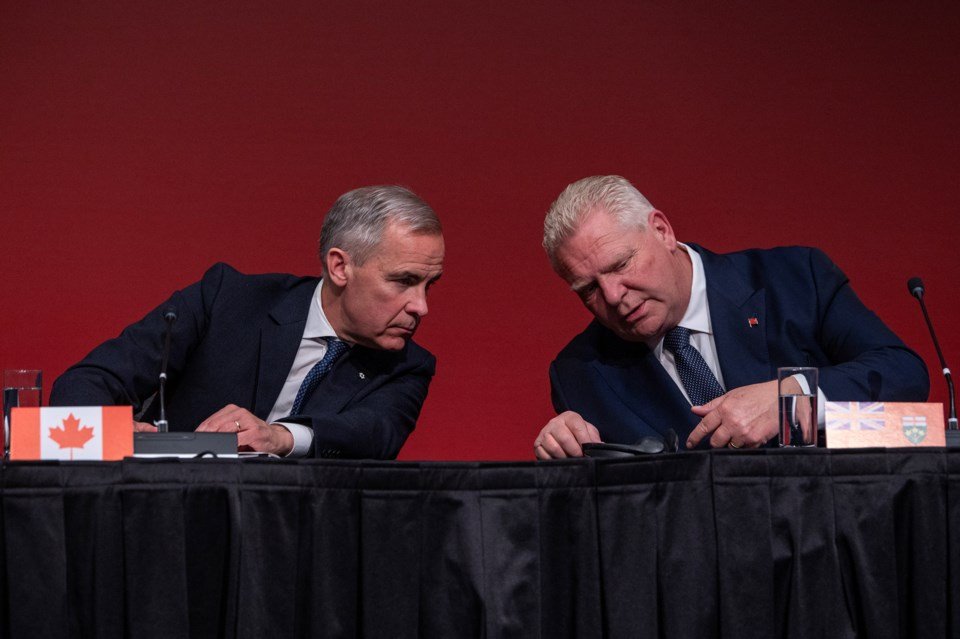
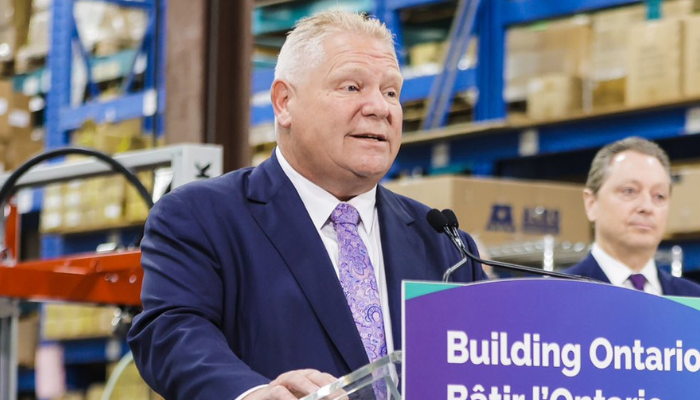
The announcement was made jointly by Prime Minister Mark Carney, Ontario Premier Doug Ford, federal Housing and Infrastructure Minister Gregor Robertson, Ontario Finance Minister Peter Bethlenfalvy, Ontario Minister Rob Flack, and Toronto Mayor Olivia Chow. Toronto is receiving $1.5 billion through the Canada-Ontario Partnership to Build — flowing from the federal Build Communities Strong Fund — specifically because the city agreed to slash residential development charges.
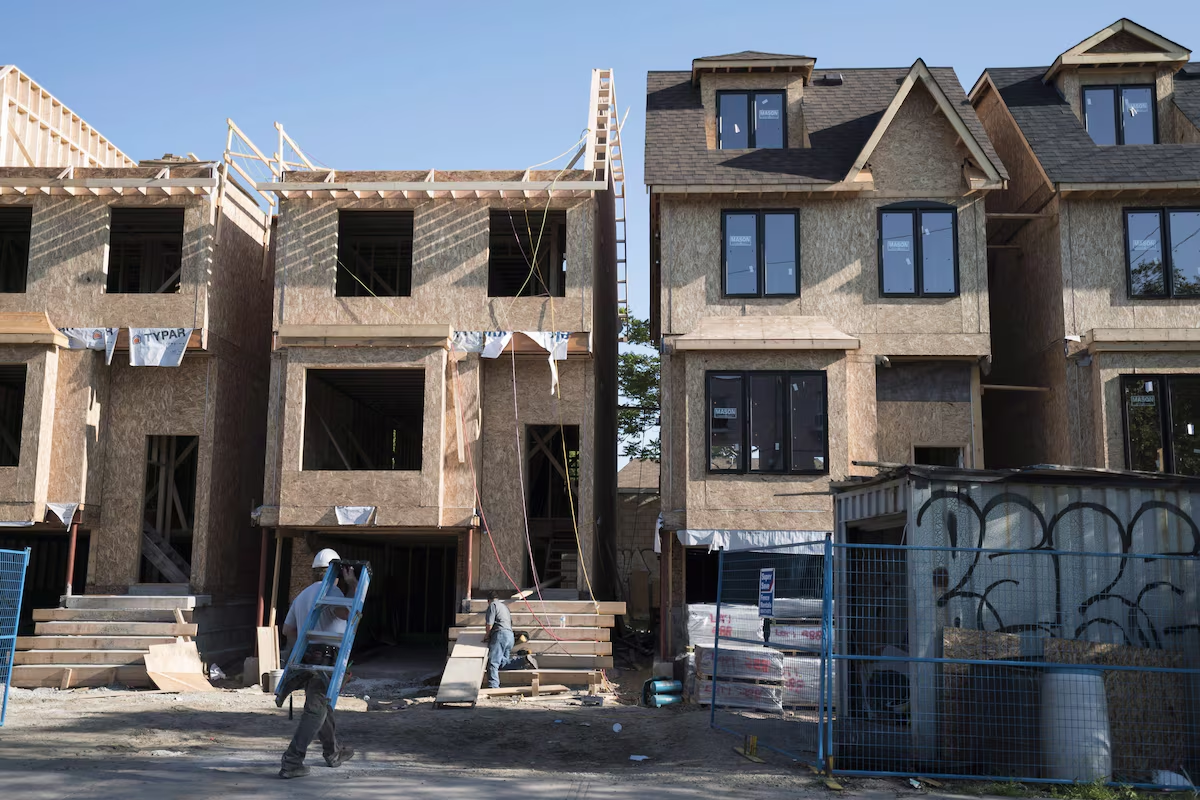
Development charges are the fees municipalities collect from builders to pay for the roads, water and sewer lines, transit, and community facilities that new housing developments need. In Ontario, those charges can add up to 20 percent of a new home’s purchase price, according to the Toronto Regional Real Estate Board (TRREB) — a cost that ultimately gets passed on to buyers and renters.
How Much Will Development Charges Actually Drop?
Toronto will reduce its development charges by 40 to 60 percent between 2026 and 2029, which exceeds the program’s base requirement of a 30 to 50 percent cut. The exact reduction varies by unit type, with the steepest cuts aimed at the “missing middle” — townhomes, small multiplexes, and family-sized condo units that Toronto badly needs more of.
Mayor Olivia Chow framed the deal simply: “People should be able to afford a home in our city — we’re reducing the cost of building new homes.” TRREB President Daniel Steinfeld called it “a major step, and the type of leadership needed,” to lower housing costs and increase construction across the Greater Golden Horseshoe.
The $8.8 Billion Canada-Ontario Infrastructure Deal Behind It
Toronto’s $1.5 billion is one slice of a much bigger pact. On March 30, 2026, Carney and Ford announced that Canada and Ontario would cost-match $8.8 billion over 10 years for housing-enabling infrastructure — water and wastewater systems, roads, bridges, transit vehicles, libraries, and recreation centres — specifically tied to municipalities that agree to cut development charges.
“Our new partnership with Ontario is about building more affordable homes, more transit, and more careers in the skilled trades,” Carney said. Ford called the deal “transformational for Ontario and Canada, delivering new homes, transit and infrastructure.” Toronto is the largest single recipient announced so far under this program.
Who Actually Qualifies for the HST Rebate?
The HST relief is the part of this deal most likely to directly touch an individual buyer’s bottom line, so eligibility details matter. Based on the published framework, a purchase generally needs to meet these conditions to qualify:
- The home must be newly constructed, not a resale of an existing property.
- The purchase and sale agreement must be signed between April 1, 2026, and March 31, 2027.
- The home must be priced at or below $1.85 million to receive any rebate at all; the full $130,000 maximum applies up to $1 million.
- The property generally needs to be intended as a primary residence to qualify for the buyer-side rebate (builders and investors should confirm their specific situation with a tax professional, since commercial and purpose-built rental treatment differs).
If you’re budgeting around this, the safest approach is to ask your builder or real estate lawyer directly whether a specific unit and closing date fall inside the eligible window before you rely on the rebate in your financing plan — rules like this are sometimes adjusted or clarified after the initial announcement.
Timeline: How Canada and Ontario Got Here
This week’s announcement is the latest step in a fairly fast-moving sequence of federal and provincial housing moves. Laid out chronologically, the pattern is clear — both governments have been building toward exactly this kind of city-level deal for almost a year:
- September 14, 2025: Build Canada Homes launches as a new federal agency with $13 billion in initial capital from Budget 2025.
- Fall 2025: Build Canada Homes begins funding individual Toronto rental projects, including Regent Park Phase 4A and 389 Cleveland Street.
- March 30, 2026: Prime Minister Carney and Premier Ford announce the $8.8 billion, 10-year Canada-Ontario infrastructure partnership and the HST relief on new homes.
- April 1, 2026: The HST relief window opens for eligible new-home purchase agreements.
- June 23, 2026: Toronto’s $1.5 billion development charge funding is confirmed — the largest single municipal allocation announced under the program so far.
Seen together, this isn’t a one-off announcement so much as a multi-year campaign by Canada and Ontario to make homes more affordable in Toronto and other high-cost Ontario cities, with each step building on the last.
HST Relief: Up to $130,000 Off a New Home
Separately, Canada and Ontario agreed to remove the full 13% HST on new homes priced up to $1 million, for purchase agreements signed between April 1, 2026, and March 31, 2027. The rebate then tapers for pricier homes:
- Up to $1 million: full HST removed (worth up to $130,000)
- $1 million to $1.5 million: rebate phases down from the $130,000 maximum
- $1.5 million to $1.85 million: rebate continues to shrink
- Above $1.85 million: rebate caps out at $24,000
Stack the HST relief on top of Toronto’s development charge cuts and the two governments estimate combined savings of close to $200,000 on an eligible new home — though the actual number you see will depend on the unit’s price, type, and whether the builder passes the full savings on to buyers.
Will This Actually Lower Home Prices in Toronto?
Not everyone agrees the savings will fully reach buyers. Development charge cuts and HST relief reduce a builder’s cost to construct a home, but nothing legally requires a developer to pass 100% of that savings on to the purchase price — especially in a market where demand for new units still outstrips supply in many neighbourhoods.
TRREB and most housing economists argue the bigger benefit is on the supply side: projects that were financially unworkable at the old cost structure become viable again, which over a few years should mean more units competing for buyers, not just cheaper units today. That view lines up with how Toronto’s rental incentive program has played out so far — thousands of new purpose-built rental homes that likely wouldn’t have been built otherwise, rather than an immediate citywide drop in average rents.
In short: treat the $200,000 figure as the maximum theoretical saving on an eligible new-build unit, not a guaranteed discount, and expect the supply-side effects to show up more gradually than the funding announcement itself.
What This Means If You’re a Newcomer or First-Time Buyer in Toronto
If you’re new to Canada or saving for your first home, the timing matters more than the headline numbers. A few practical points:
- The HST window is time-limited. To qualify, your purchase agreement needs to be signed between April 1, 2026, and March 31, 2027 — so pre-construction units signed outside that window won’t qualify.
- Lower development charges should mean more supply, not just cheaper supply. Cheaper-to-build projects that were previously stalled or unfeasible are more likely to get greenlit, which over time adds more units to a notoriously tight market.
- Rentals benefit too. Toronto’s parallel Purpose-Built Rental Housing Incentives program has already supported over 8,000 new rental homes (2,000+ affordable) in its first phase, with a second phase targeting 10,000 more rental homes, at least 2,000 of them affordable.
- This adds to, not replaces, settlement budgeting. If you’re newly landed, it’s still worth reading our guide on housing challenges and practical tips for newcomers before you start house- or apartment-hunting.
A worked example: say a new-build condo in Toronto is priced at $700,000 with an agreement signed in the eligible window. Removing the HST could save roughly $91,000 (13% of $700,000, within the full-rebate threshold), and if the development charge savings on that unit are passed through at even half their potential value, that could be another $15,000–$20,000 off the builder’s cost base. It won’t always show up as a dollar-for-dollar price cut, but it materially changes which projects get built and at what price point they can launch.
The Bigger Picture: Build Canada Homes and the Housing Accelerator Fund
This announcement doesn’t exist in isolation — it’s the latest move in a broader federal-provincial push on housing supply:
- Build Canada Homes, the federal housing agency launched in September 2025 with $13 billion in initial capital, is already funding Toronto rental projects directly, including over $86 million for 271 rental homes at Regent Park Phase 4A, over $112 million for 217 homes at 389 Cleveland Street, and $160 million combined for 341 more rental homes citywide.
- The Housing Accelerator Fund (HAF), by contrast, has had a rougher run in Toronto. The city’s 2023 agreement promised $471.1 million in exchange for 60,980 net new permitted homes, but Toronto has since been found non-compliant with parts of that agreement, resulting in a $7.4 million funding clawback. It’s a reminder that housing announcements are easier to make than targets are to hit.
For more on how federal policy has been shifting around housing and immigration together, see our breakdown of Canada’s 2026 immigration and housing measures, and our look at the state of social housing in Canada.
Frequently Asked Questions
What is the $1.5 billion Toronto housing announcement?
It’s federal and Ontario funding, delivered through the Canada-Ontario Partnership to Build, that compensates the City of Toronto for cutting development charges on new homes by 40 to 60 percent between 2026 and 2029.
Who announced the Toronto housing funding?
Prime Minister Mark Carney, Ontario Premier Doug Ford, federal Minister Gregor Robertson, Ontario Ministers Peter Bethlenfalvy and Rob Flack, and Toronto Mayor Olivia Chow jointly announced the deal on June 23, 2026.
How much can I save buying a new home in Toronto under this plan?
Combining the development charge cuts with the HST removal on new homes (up to $130,000) could bring total savings to roughly $200,000 on an eligible home, depending on price and unit type. Read about other federal cost-of-living relief measures that may also apply to your situation.
Why is this happening now?
Development charges currently make up as much as 20 percent of a new home’s price in Ontario. Federal and provincial governments are trying to bring that down to unlock stalled construction projects and improve affordability in one of Canada’s tightest housing markets — part of the same push that created Mark Carney’s reorganized federal cabinet and its focus on housing and infrastructure.
Does this affect renters too, or only buyers?
Both. Lower development charges make purpose-built rental projects more financially viable, and Toronto’s rental incentive program has already supported thousands of new rental units, with thousands more planned.
The Bottom Line
The $1.5 billion announcement is the largest single piece yet of a multi-year push by Canada and Ontario to make homes more affordable in Toronto — combining development charge cuts, a temporary HST holiday, direct federal investment through Build Canada Homes, and (with mixed results so far) the Housing Accelerator Fund. None of it will make Toronto cheap overnight, but for buyers signing agreements in the next year, and for the broader supply pipeline over the next three, it’s real money.
Keep an eye on official updates at Housing, Infrastructure and Communities Canada and the City of Toronto newsroom as eligibility details for the HST rebate and development charge changes are finalized.
Toronto isn’t the only city in line for this kind of deal, either — the same $8.8 billion infrastructure partnership is structured so other Ontario municipalities can negotiate their own development charge reductions in exchange for funding, so expect similar announcements for other Greater Golden Horseshoe cities over the next year or two as more agreements are finalized.