How to Get an Educational Credential Assessment (ECA) for Express Entry

If you completed your education outside Canada and want to apply for permanent residence through Express Entry, an Educational Credential Assessment is not optional — it is a mandatory step for most applicants. Without a valid ECA, you cannot enter the Express Entry pool under the Federal Skilled Worker Program, you cannot claim education points in your CRS score, and your application will be refused if you submit one that has expired.
The ECA process is straightforward once you understand how it works. The challenge is knowing which organisation to use, what documents to prepare, and how to time the process so your report is valid when you need it. This guide walks through every step.
What an ECA is — and what it is not
An ECA is an official report that verifies your foreign degree, diploma, or certificate is genuine and determines what level of Canadian credential it is equivalent to. IRCC uses the equivalency result — not your original credential — to calculate your education points in the CRS.
For example, if you hold a four-year bachelor’s degree from a university in India or Nigeria or Brazil, the ECA determines whether that degree is equivalent to a Canadian bachelor’s degree, a two-year diploma, or some other level. The equivalency result directly affects how many CRS points you receive for education.
Two things an ECA does not do: it does not guarantee you a job in Canada, and it does not give you a licence to practise a regulated profession. Professional licensing is a separate process governed by provincial regulatory bodies. Even a fully recognised ECA for a medical degree from the Medical Council of Canada does not allow you to practise medicine in Canada — licensing requirements still apply.
Who needs an ECA
You need an ECA for Express Entry if you completed your education outside Canada and you are applying as the principal applicant. Specifically:
Federal Skilled Worker Program: An ECA is mandatory. Without one, you cannot establish education eligibility under FSWP.
Canadian Experience Class: An ECA is not required for CEC eligibility. However, if you have a foreign credential and want to claim education points in the CRS, you should still get an ECA — the points are available to you, and most CEC applicants leave significant CRS points unclaimed by skipping this step.
Federal Skilled Trades Program: An ECA is not required for FSTP eligibility, but can add education points to your CRS score.
Accompanying spouse or common-law partner: If your spouse is accompanying you and has a foreign credential, they also need an ECA if you want to claim education points for them in the spouse factors section of the CRS.
You do not need an ECA if your credential was issued by a Canadian secondary or post-secondary institution. Canadian credentials are accepted directly.
The designated organisations — and which one to use
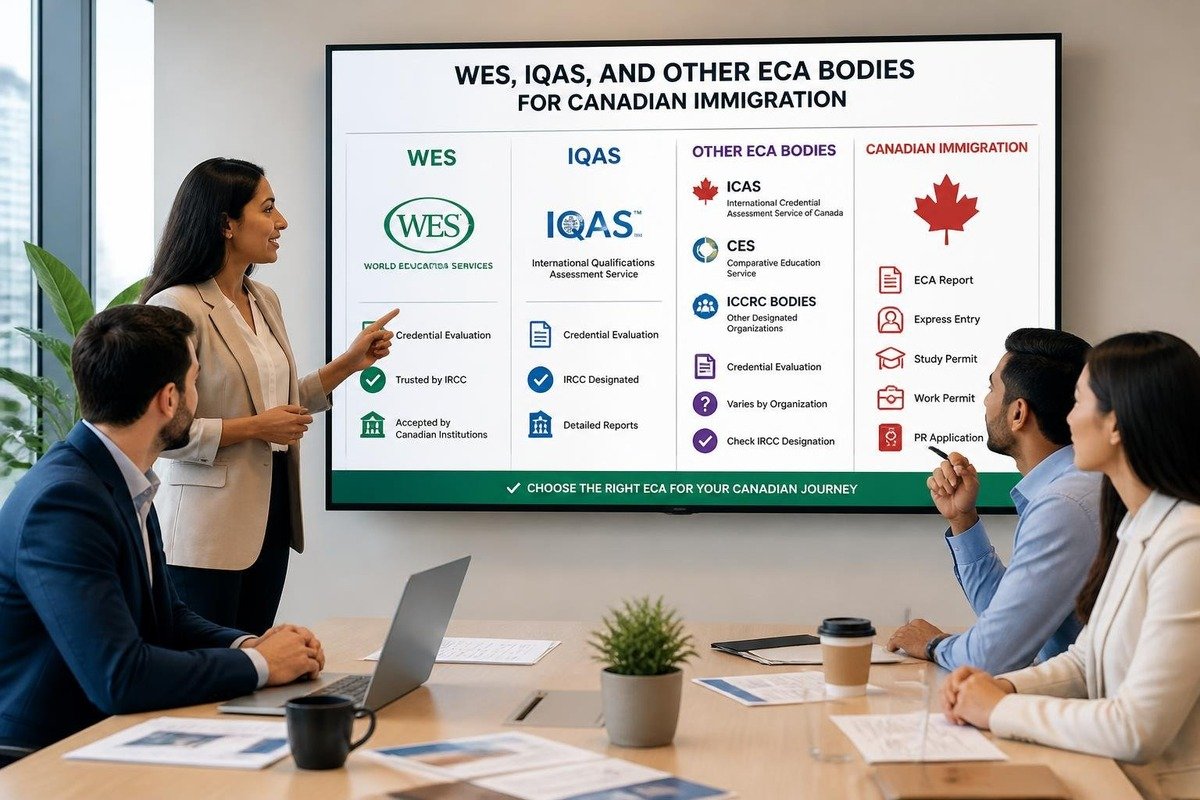
IRCC only accepts ECAs from organisations it has officially designated. Submitting an ECA from a non-designated body, or from a body that was not yet designated at the time your ECA was issued, results in the report being rejected.
The current designated organisations for general academic credentials are:
World Education Services (WES) is the most widely used ECA body for Express Entry. Its online application system is well-documented, it accepts documents from institutions in most countries, and its processing times are generally competitive. WES reports are also accepted by many Provincial Nominee Programs, including the Ontario Immigrant Nominee Program, making WES assessments reusable across multiple programs.
Comparative Education Service (CES) — operated by the University of Toronto School of Continuing Studies. A well-regarded option for applicants whose institutions are familiar to CES evaluators.
International Credential Assessment Service of Canada (ICAS) — a private assessment service accepted for federal Express Entry and several provincial programs.
International Qualifications Assessment Service (IQAS) — operated by the Government of Alberta. Standard processing is approximately 15 business days, with rush service available. Well-suited for applicants planning to settle in Alberta, and accepted federally for Express Entry.
International Educational Credential Evaluation Service (ICES) — operated by the British Columbia Institute of Technology (BCIT). Accepted federally and by the College of Nurses of Ontario.
For most regulated professions, a different body applies:
Medical Council of Canada (MCC) — mandatory for specialists in clinical and laboratory medicine (NOC 31100), general practitioners and family physicians (NOC 31101), and other specialist physicians (NOC 31102). MCC only assesses medical degrees and diplomas.
Pharmacy Examining Board of Canada (PEBC) — mandatory for pharmacists.
Canadian Architectural Certification Board (CACB) — mandatory for architects (NOC 21200) from October 31, 2024 onward. If you already held a valid ECA from another designated body issued before that date, IRCC continues to accept it while it remains valid.
The key rule: If your occupation is regulated and a specific professional body is designated for that occupation, you must use that body — not a general assessor like WES. Using the wrong organisation is one of the most common and costly ECA mistakes, because it results in the report being rejected by IRCC and requires you to restart the process with the correct body.
If your occupation does not require licensing and is not covered by a mandatory professional body, any of the five general designated organisations is acceptable.
Which credential to get assessed
In most cases, you only need an ECA for your highest level of education. If you hold a Master’s degree, you get the Master’s assessed — you do not also need to assess your Bachelor’s degree.
There is one exception: if you want to claim points for two or more credentials — which earns 128 CRS points rather than 120 for a single bachelor’s — you need an ECA for each credential being claimed. For dual-credential points, at least one of the credentials must represent three or more years of study.
If your primary credential cannot be assessed at the expected equivalency level — for example, if a three-year bachelor’s degree is assessed as equivalent to a Canadian two-year diploma — you may be able to submit a secondary credential (such as a high school diploma) for assessment separately to claim at least secondary-level education points.
Step-by-step: how to get your ECA
Step 1 — Choose your organisation
Confirm whether your occupation requires a specific professional body. If not, choose from the five general designated organisations. WES is the most commonly chosen for its familiarity and breadth of institutional coverage, but IQAS and ICES offer competitive processing times.
Step 2 — Create an account and start the application
Each organisation has its own online portal. Create an account, select the assessment type specifically for immigration purposes (not employment, academic admission, or other purposes — some bodies offer different ECA types and only the immigration-specific version is accepted by IRCC), and begin the application.
Step 3 — Gather your documents
The exact document requirements vary by organisation and by country, but the following apply universally:
Official transcripts: Must be sent directly from your institution to the ECA organisation, either electronically through an official transcript-sharing system or as a sealed, stamped envelope with the institution’s official markings intact. Opening a sealed transcript envelope before submission renders it invalid — a common and avoidable mistake.
Degree certificate or diploma: A certified true copy of your degree, diploma, or certificate. Certification must be by an authorised official — a notary, lawyer, or the institution’s registrar. Photocopies that are not certified are not accepted.
Translations: Any documents not in English or French must be accompanied by the original document, a complete certified translation, and the translator’s signed affidavit. The translator must be professionally certified — translations by family members are not accepted.
Important: Contact your institution early to request transcripts. International transcript requests typically take two to eight weeks, depending on the institution’s administrative process. This waiting period is often the largest single delay in the ECA process, and it is entirely outside your control once requested.
Step 4 — Pay the assessment fee
Most general ECA assessments cost between $200 and $260 CAD. WES charges approximately $256 CAD for a standard ECA report, plus delivery fees and applicable taxes. IQAS charges differ and rush processing incurs an additional fee. Check each organisation’s current fee schedule before submitting, as fees are updated periodically.
All ECA fees are non-refundable once the application is submitted, regardless of outcome.
Step 5 — Submit the application and wait
Once your documents and payment are submitted, processing begins. Standard processing times across the general designated organisations range from approximately 15 to 35 business days, depending on the organisation and the complexity of your credentials. Processing times can extend during peak application periods — typically September through December — when institutional volumes are highest.
IQAS quotes approximately 15 business days for standard processing. WES processing times vary depending on country of institution but are generally in the same range for standard service.
Step 6 — Receive your report and reference number
When your ECA is complete, you receive a report indicating the Canadian equivalency of your credential. You also receive an ECA reference number. Both the report and the reference number must be entered into your Express Entry profile — the reference number is how IRCC links your ECA to your application electronically.
The five-year validity rule — and why timing matters
An ECA is valid for five years from the date it is issued. It must be valid — not expired — on both the date IRCC receives your Express Entry profile and the date IRCC receives your application for permanent residence.
Since Express Entry processing can take six months or more after you submit your PR application, an ECA issued five years ago that appears technically valid when you enter the pool may expire during processing. If your ECA expires before IRCC makes a final decision, your application will be refused on the basis of an expired ECA.
The practical rule: get your ECA at least six to twelve months before your ECA’s five-year expiry if you are still waiting for an ITA or in the middle of a PR application. Renewing an ECA — resubmitting to the same organisation with your original reference number — is typically faster and less expensive than obtaining a new one from scratch.
What if the ECA result is lower than expected?
This happens. A foreign master’s degree may be assessed as equivalent to a Canadian bachelor’s degree. A four-year bachelor’s may come back as a two-year diploma equivalency. The result is based on the institution’s accreditation, curriculum content, and the alignment of the programme with Canadian standards — not on your personal performance or grades.
If your ECA result is lower than expected, you have a few options:
You can still use the report. You must report the Canadian equivalency result in your Express Entry profile — not your original credential level. Using the lower equivalency still earns you education points, just fewer than you hoped for.
You can get a second opinion. Different designated organisations sometimes produce different equivalency results for the same credential. Submitting to a second organisation is permitted and sometimes produces a more favourable assessment, though it is not guaranteed and involves additional cost and time.
You can request a review. Some organisations have a formal review or appeal process for assessments you believe are incorrect. This typically requires additional supporting documentation about your programme’s curriculum or the institution’s accreditation status.
Common mistakes to avoid
Using the wrong organisation for a regulated profession. If you are a physician, pharmacist, or architect and you submit your ECA to WES instead of the mandatory professional body, your report will be rejected. This is the most expensive mistake because it requires starting over.
Opening sealed transcript envelopes. Once opened, official transcripts lose their validity for submission purposes. Request a spare sealed copy from your institution if you want to review the contents.
Choosing the wrong ECA type. Some organisations offer ECA reports for employment or academic purposes as well as immigration. Only the immigration-specific ECA is accepted by IRCC. Confirm the report type at the time of application.
Waiting too long to request transcripts. The institution’s transcript processing time is the variable you cannot control. Request documents from your university the same week you decide to pursue an ECA — not after you have completed all the other steps.
Letting the ECA expire during processing. Monitor your ECA’s five-year expiry date relative to your application timeline. If you are in the pool and approaching the expiry date, renew proactively rather than waiting for it to lapse.
Not getting an ECA for an accompanying spouse. If your spouse has a foreign credential and is listed on your Express Entry application, their ECA adds education points to your CRS score through the spouse factors section. Many applicants overlook this.
The CRS points your ECA unlocks
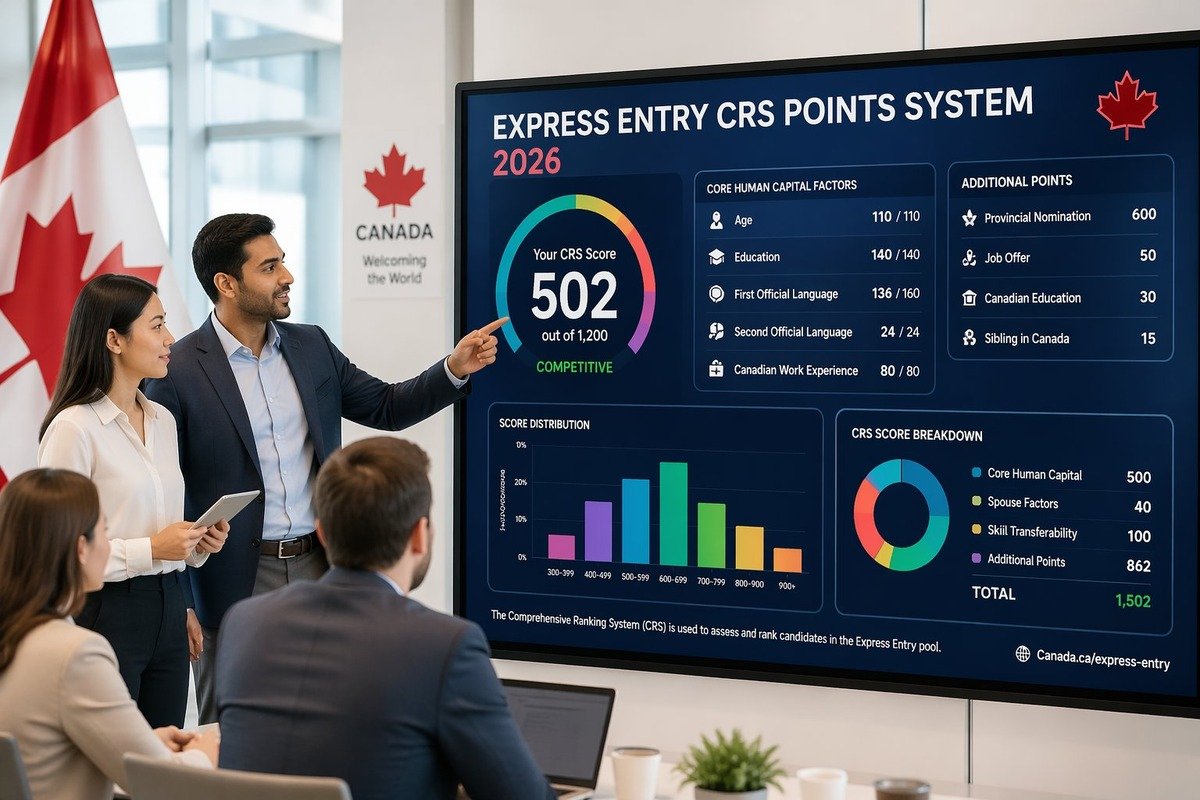
To illustrate why the ECA is worth the effort and cost, here is what the education points look like in the CRS for a single applicant:
| Canadian equivalent | CRS points (single applicant) |
|---|---|
| High school diploma | 30 |
| 1-year post-secondary certificate | 90 |
| 2-year post-secondary program | 98 |
| Bachelor’s degree or 3+ year program | 120 |
| Two or more credentials (one 3+ years) | 128 |
| Master’s degree | 135 |
| PhD | 150 |
At CLB 9 or above in your first official language, a bachelor’s degree equivalency also unlocks up to 50 skill transferability points — the education-language transferability bonus doubles from 25 points (CLB 7–8) to 50 points (CLB 9+). That means the ECA is not just worth the 120 education points on its own. For an applicant with CLB 9 language scores, a bachelor’s degree ECA is worth up to 170 CRS points in total.
Skipping the ECA because it seems like a bureaucratic hassle leaves up to 170 CRS points unclaimed — typically the difference between an active pool profile and one that never receives an ITA.
Key takeaways
An ECA is mandatory for FSWP and strongly advisable for all Express Entry streams where you have foreign post-secondary credentials.
Use only IRCC-designated organisations. For regulated professions — doctors, pharmacists, architects — a specific professional body is mandatory. For all other applicants, WES, CES, ICAS, IQAS, and ICES are all accepted.
Start early. The transcript request from your institution is typically the longest step, and it is outside your control. Allow two to eight weeks for transcripts before you can even submit the ECA application.
Your ECA is valid for five years from the issue date. Monitor this date relative to your application timeline — an expired ECA results in application refusal.
You only need an ECA for your highest credential in most cases. If you want dual-credential points (128 vs 120 CRS points), get an ECA for each credential claimed.
Enter your ECA reference number — not just the report — into your Express Entry profile. IRCC links your assessment electronically using the reference number.
This post is for informational purposes only and does not constitute legal or immigration advice. ECA requirements, fees, and designated organisations are subject to change — always verify current requirements at canada.ca and at the relevant assessment body’s official website before applying.