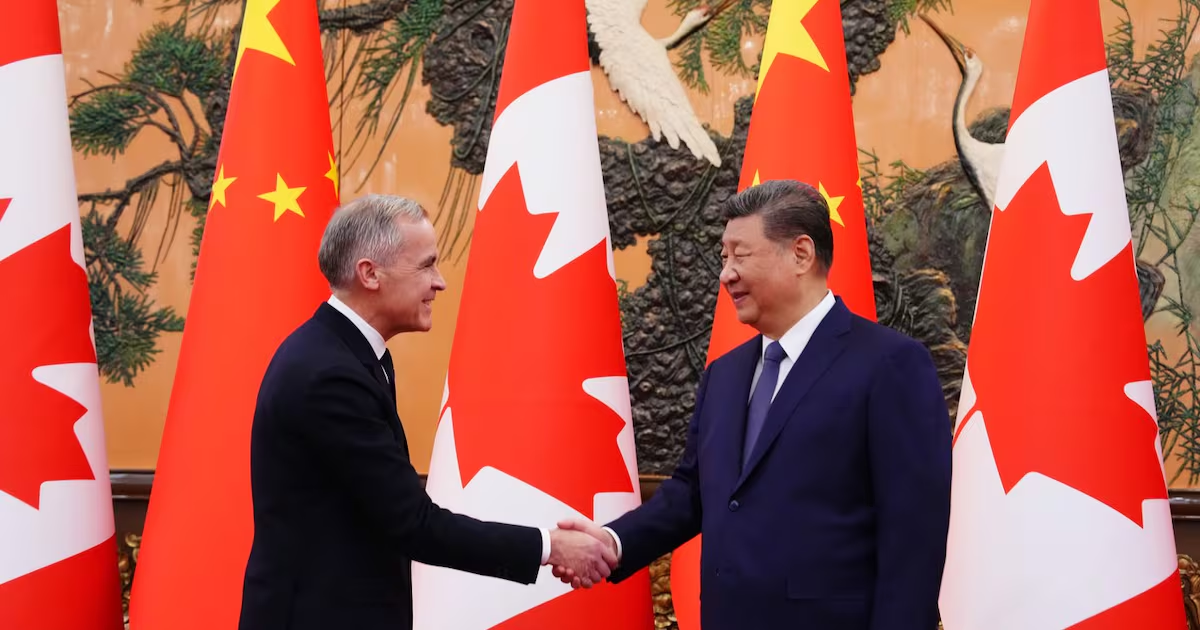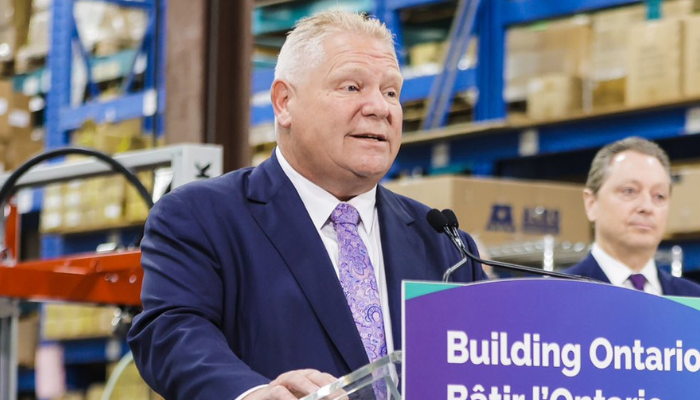
Ontario Premier Doug Ford is mounting a sharp critique of Prime Minister Mark Carney’s new trade agreement with China, warning the deal could put Ontario workers—and the province’s auto industry—at a serious disadvantage.
At the centre of Ford’s concern is a provision that would allow up to 49,000 Chinese-made electric vehicles (EVs) into Canada each year, subject to a 6.1 per cent tariff. In return, China would ease tariffs on selected Canadian exports, including canola and seafood.
Ford argues the trade-off may benefit some exporters but comes at a steep cost to Ontario’s manufacturing base.
“A foothold” in Canada’s EV market
Speaking on the deal, Ford said it gives China a strategic foothold in the Canadian auto market, one that could quickly expand. He warned that lower-cost Chinese EVs could undercut vehicles built in Ontario, where automakers are already grappling with global competition, rising costs, and supply-chain pressures.
Ontario remains the heart of Canada’s auto industry, with major plants in Brampton and Oshawa and tens of thousands of direct and indirect jobs tied to vehicle manufacturing. Ford noted that the sector has already experienced job losses amid ongoing trade and economic pressures, making the timing of the agreement particularly concerning.
In plain terms: Ontario is being asked to compete, while its competitors arrive with a price advantage.
U.S. relations add another layer of risk
Beyond domestic impacts, Ford also raised alarms about how the deal could affect Canada’s relationship with the United States, still Canada’s largest export market and a critical partner under the USMCA trade agreement.
He warned that opening the door to large volumes of Chinese EVs could be seen by Washington as a workaround that undermines North American supply chains—potentially complicating already delicate trade discussions.
At a moment when Canada is trying to reinforce continental manufacturing cooperation, Ford suggests the agreement sends mixed signals.
EV mandates and manufacturing protection
Ford has urged the federal government to reconsider electric vehicle mandates, arguing that policy ambition must be aligned with industrial capacity. While Ottawa has positioned EV adoption as a pillar of climate and industrial strategy, Ford maintains that domestic manufacturers need stronger protection and clearer guarantees before facing intensified foreign competition.
His message to Ottawa is straightforward: focus first on safeguarding Canadian jobs and factories, especially as USMCA negotiations and reviews continue.
A widening federal–provincial divide
The dispute highlights a familiar tension in Canadian politics—federal trade policy versus provincial economic realities. While the federal government frames the deal as a step toward stabilizing trade relations with China, Ontario sees a direct threat to one of its most important industries.
For now, Ford is calling on Ottawa to rethink the agreement and recalibrate its approach, warning that once market access is granted, it is difficult to reverse.
As debates over trade, climate policy, and industrial strategy collide, one thing is clear: the future of Canada’s auto sector is becoming a central fault line in national economic policy—and Ontario intends to be heard.